The Rise of Home Espresso: How Better Machines, Fresh Beans, and Rising Café Prices Are Pushing Coffee Lovers to Brew Their Own
By the Grindset team · April 17, 2026 · 6 min read
The Numbers Don't Lie
Somewhere around 2019, something shifted in the home espresso market that wasn't just a blip in consumer behavior. Sales of prosumer espresso machines, the category sitting between entry-level capsule devices and full commercial equipment, grew faster than almost any other kitchen appliance segment through the early 2020s. Breville reported record revenues. De'Longhi's La Specialista line kept selling out. Small importers bringing in Lelit and ECM machines from Europe started carrying wait lists for the first time. The causes aren't mysterious when you look at them carefully, but they do stack on each other in ways that have created a genuinely durable shift rather than a pandemic-era fad.
This isn't just about people being stuck at home for two years and buying things to fill the time. The people who bought a Breville Barista Express in 2020 are still using it in 2025. They've upgraded their grinders. They're ordering single-origin espresso roasts from specialty roasters. The initial purchase opened a door that many of them had no intention of walking through, and now they're pulling 18-gram shots into a preheated cup and discussing extraction yield on forums at midnight. Understanding why this happened requires looking at three converging forces at once.
Machines Have Gotten Dramatically Better for the Price
A prosumer espresso machine in 2010 that could hold stable brew temperature and deliver 9 bars of pressure with any precision cost somewhere north of $1,500, often more. The internal components that matter most, specifically a PID temperature controller and a vibratory or rotary pump capable of consistent pressure, were expensive to manufacture at consumer scale. What you got under $800 was largely unreliable, prone to temperature swings of 10 to 15 degrees Fahrenheit between shots, and built with enough plastic that it felt like a compromise the whole time you used it.
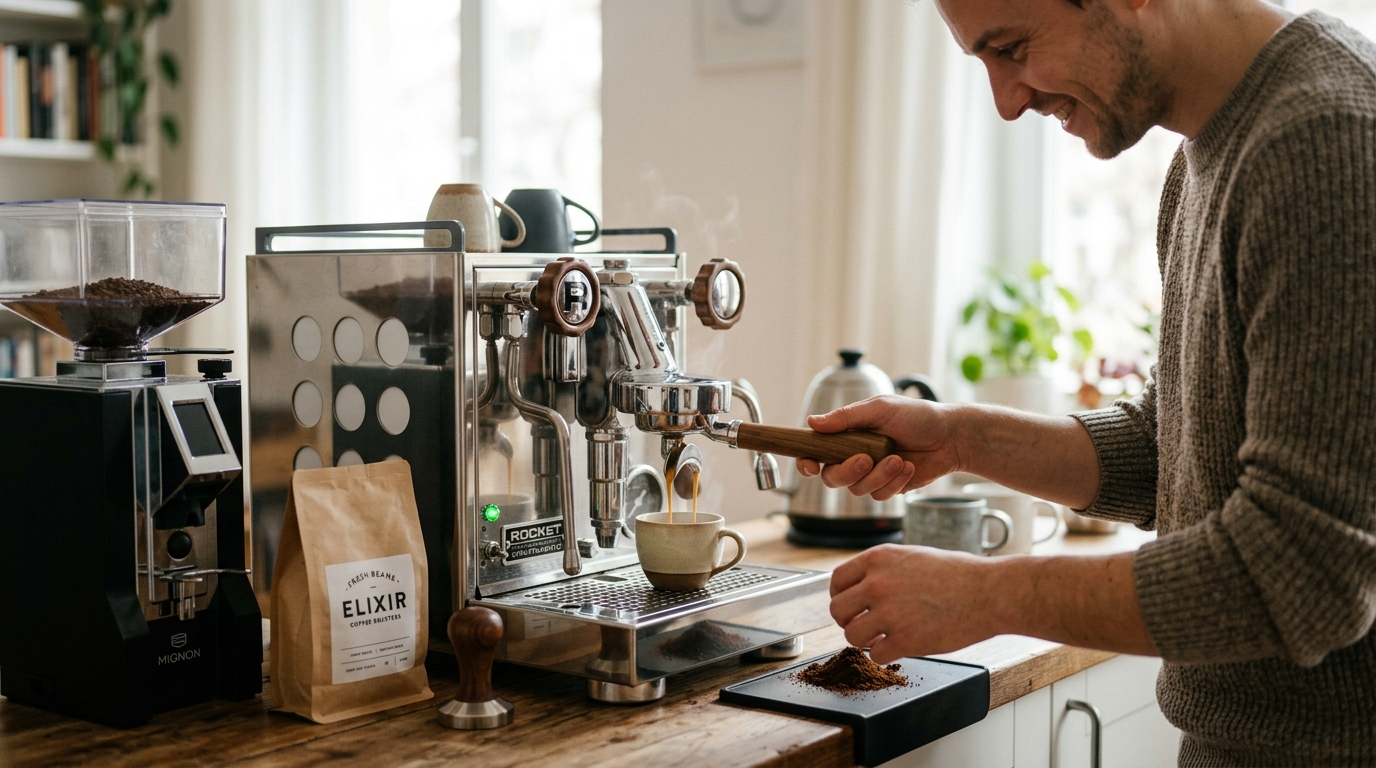
That picture changed substantially. Today, machines like the Breville Barista Express Impress or the Gaggia Classic Pro sit in the $500 to $700 range and deliver actual 9-bar pressure with thermocoil or thermoblock heating systems that, while not perfect, are stable enough to pull consistent shots once you understand their quirks. More importantly, the ceiling has risen. Machines with dual boilers, full PID control, and pre-infusion capability, which allow you to ramp pressure gradually before hitting full extraction pressure, are now available in the $1,200 to $2,000 range from brands like Lelit, ECM, and Rocket. Five years ago that spec level cost $3,000 or more. The price compression at the mid-tier and upper-mid-tier has been significant, and it means the hobbyist who wants real control over their brew temperature (hitting 198°F to 202°F, or 92°C to 94°C, with less than 1 degree of variance) can actually achieve it without spending specialty café money on equipment.
Grinder technology followed a similar curve. Flat burr grinders capable of producing the tight, uniform particle distribution that espresso demands used to start at prices that scared off most home brewers. The Niche Zero arrived around 2019 as a single-dose flat burr grinder at roughly $600 and changed the conversation about what was achievable at home. Since then, competition from brands like DF64, Turin, and Timemore has pushed capable single-dose grinders down toward $300 to $400. A poor grinder will ruin extraction regardless of how good your machine is, because espresso at 9 bars is brutally sensitive to particle size distribution. The fact that you can now buy a genuinely capable burr grinder and a stable machine for under $1,500 combined is a real change from where the market sat a decade ago.
Specialty Coffee Culture Created a Demand the Café Market Can't Fully Satisfy
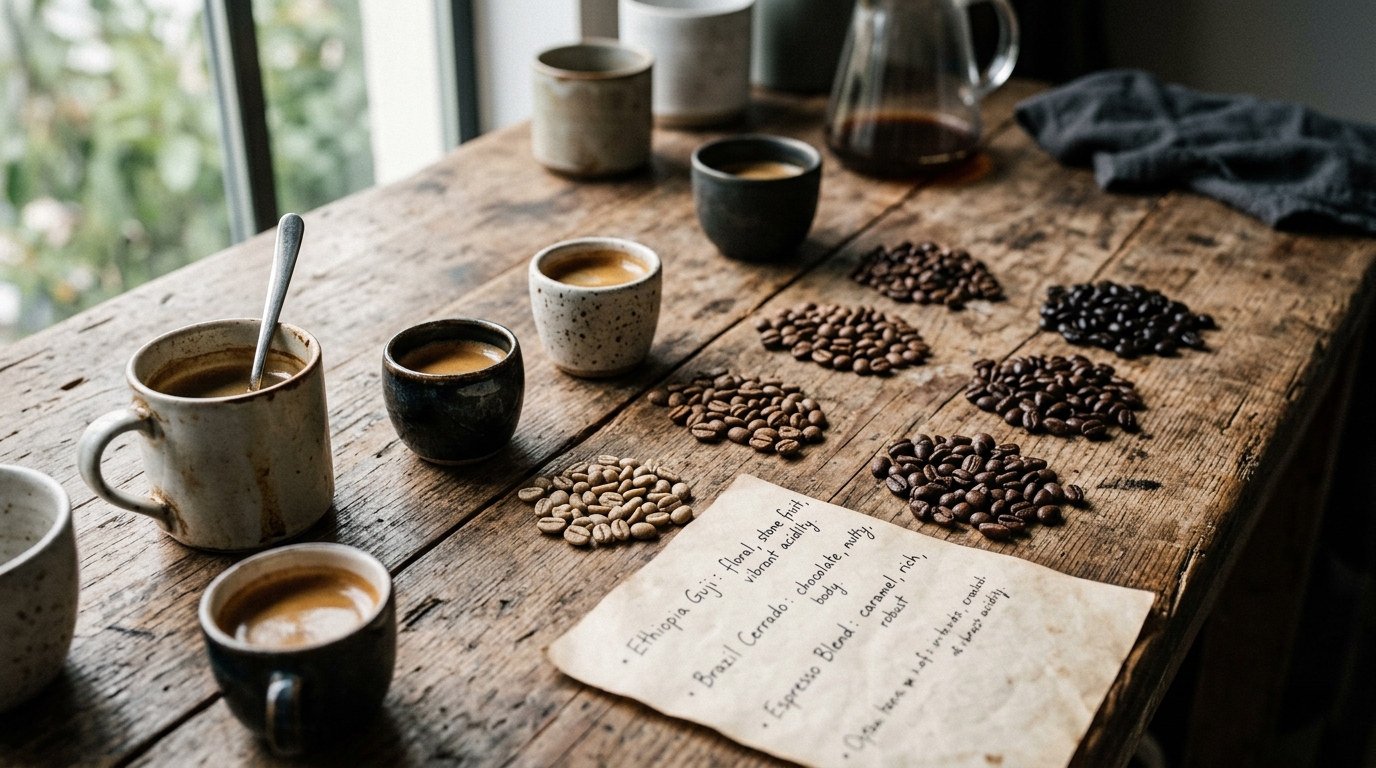
The third wave coffee movement spent twenty years training consumers to care about things like origin traceability, processing method, and roast date. A coffee drinker who understands why a washed Ethiopian Yirgacheffe tastes different from a natural processed one from the same region, and who knows that coffee extracted at 201°F will taste different than the same coffee at 196°F, is not going to remain satisfied with a café that charges $7 for a latte made from beans roasted six weeks ago. They want control. They want freshness. And increasingly, they've realized the only way to get both reliably is to do it themselves.
Specialty roasters shipping directly to consumers have made sourcing fresh, high-quality espresso beans trivially easy. Subscriptions from roasters like Heart, Onyx, Intelligentsia, and dozens of smaller regional operations mean you can have coffee roasted within the last week delivered to your door on a schedule you control. The flavor difference between coffee roasted 5 days ago and coffee roasted 40 days ago, especially in espresso, is not subtle. Carbon dioxide off-gassing affects extraction, bloom behavior, and ultimately the clarity of flavor in the cup. Once you've tasted that difference, buying pre-ground beans from a café counter loses its appeal entirely.
Café Prices Have Made the Math Undeniable
Specialty espresso drinks in most major American cities now run $6 to $8 for a cortado or a flat white. In high-cost cities like San Francisco, New York, or Seattle, $8 to $10 is not uncommon, and that price reflects real cost pressures: labor, rent, equipment maintenance, waste, and commodity prices that have spiked substantially in recent years. Nobody is getting rich running a café. But from the home brewer's perspective, the math has become extremely compelling. At $7 per drink and two drinks per day for a household, you're spending $420 per month on espresso. A $1,200 machine and $400 grinder pay for themselves in under four months at that rate, with beans costing roughly $1.50 to $2.50 per double shot when you're buying quality whole beans in the $22 to $28 per 250-gram range.
The cost argument alone wouldn't sustain this trend if the quality ceiling were too low. But that's the key point: for a motivated home brewer pulling a 36-gram shot from 18 grams of fresh, well-roasted coffee in 28 to 32 seconds at the right temperature, the quality of the result is not obviously inferior to most café drinks. In some cases, because of bean freshness and the ability to dial in specifically for your palate, it's better.
Information Has Closed the Skill Gap
Espresso extraction is not simple chemistry to master, but it's also not magic. The variables that matter, dose weight, grind size, brew temperature, pre-infusion time, yield, and extraction time, are all learnable and measurable with a $15 scale and some patience. The accumulated knowledge from forums, YouTube channels covering extraction theory, and tools like the one I built at grindset.cafe for tracking and dialing in shots has made it far easier for new home brewers to move through the learning curve without wasting pounds of expensive coffee on shots that taste like battery acid.
The people entering the home espresso space now are not starting from zero. They're starting from a baseline of accessible, high-quality information about things like channeling, puck preparation, and the relationship between grind distribution and extraction evenness. That information infrastructure, built over years by the hobbyist community and specialty coffee professionals, is as important as the hardware improvements in explaining why home espresso has grown so fast. The machines got better, the beans got more accessible, the economics shifted, and the knowledge became available. All four happened at once, and the result is a home espresso culture that isn't going anywhere.