Matching Beans to Your Espresso Machine: A Practical Guide by Machine Type
By the Grindset team · October 4, 2026 · 6 min read
Why Machine Type Actually Changes What You Should Buy
Most coffee advice treats bean selection as a standalone decision, as if the bag of coffee exists in a vacuum. Pick something with good reviews, grind it fine, pull your shot. But the machine sitting on your counter has a significant influence on which beans will actually perform well in your cup. Pressure profiling capability, boiler temperature stability, pre-infusion behavior, and maximum brew temperature all shape how a bean's soluble compounds extract, and different beans are optimized, whether intentionally or not, for different extraction conditions.
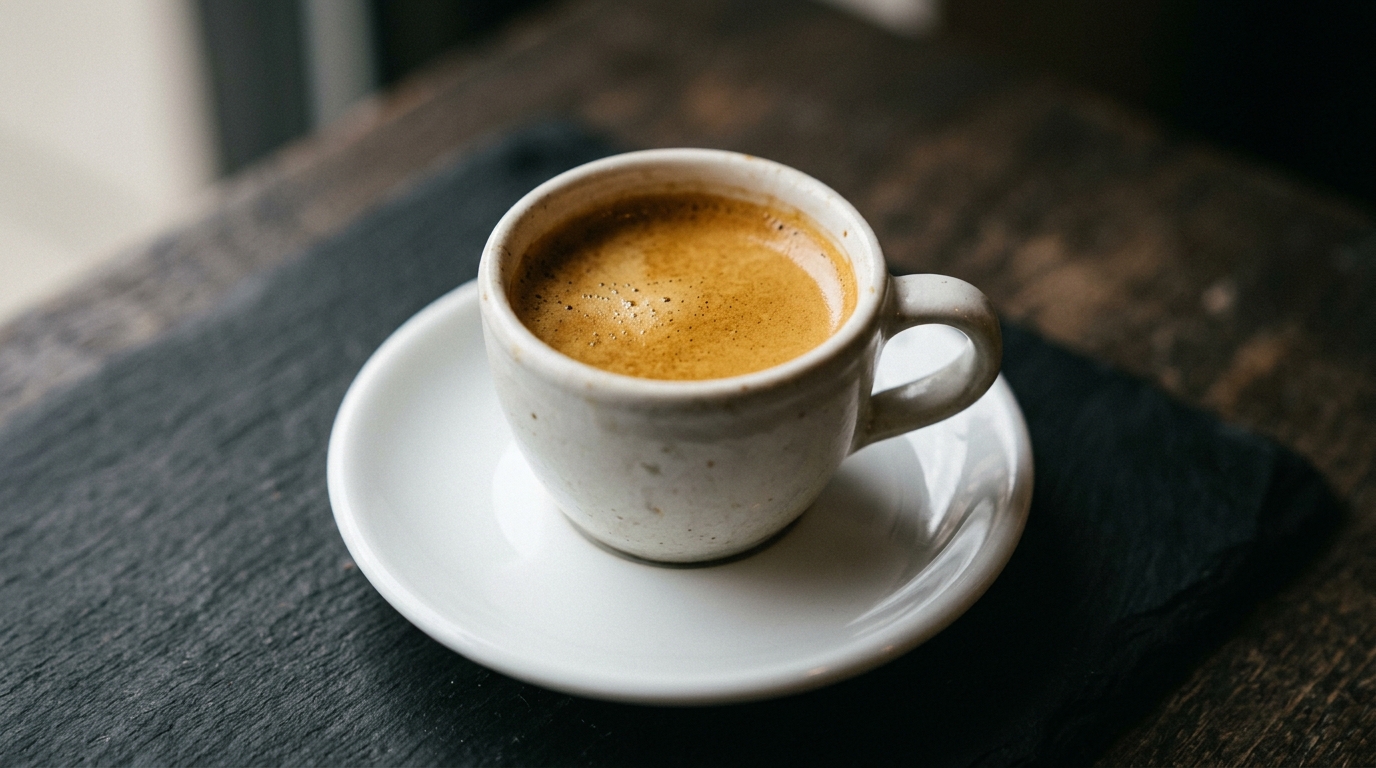
This is not about chasing boutique single origins when you have a semi-automatic, or being stuck with dark blends forever. It is about understanding the physical relationship between your machine's operating parameters and what a given bean needs to taste its best. Once you understand the mechanism, the matching becomes intuitive rather than arbitrary.
Entry-Level Machines: Pressurized Baskets and Single Boilers
Machines in the $100 to $400 range, think the Breville Bambino, DeLonghi Dedica, or Gaggia Classic in its stock configuration, typically run at fixed pressures around 9 bar with limited temperature control and, in many cases, pressurized (double-walled) filter baskets. These baskets add artificial back-pressure to compensate for inconsistent grind size, which means the machine is somewhat forgiving of coarser grinds but also means you lose fine extraction control.
For this category, medium to dark roast blends are the honest recommendation, and not just because of tradition. Darker roasts degas more aggressively, are more soluble, and tolerate the fixed temperature curves these boilers produce. A light roast single origin from Ethiopia requires precise temperature control in the 200 to 205 degrees Fahrenheit (93 to 96 degrees Celsius) range, and if your machine runs a fixed 15 bars of pump pressure funneled through a pressurized basket, you are not going to coax the jasmine and bergamot out of that bean. You will get astringency and sourness instead, which people then blame on the bean.
Look for blends containing Brazilian Santos or Colombian beans as base components. These varieties tend toward lower acidity, higher sweetness, and forgive temperature swings better than their East African counterparts. A roast level in the Full City to Vienna range (roughly 425 to 437 degrees Fahrenheit internal bean temperature during roasting) gives you oils and soluble compounds that extract readily under imperfect conditions.
Mid-Range Semi-Automatics: Single Boiler with PID or Heat Exchanger
This is where it gets more interesting. Machines like the Rancilio Silvia with a PID modification, the Breville Barista Express, or the ECM Classika give you either precise temperature control through a PID controller or the thermal stability of a heat exchanger design. You are now pulling shots at a repeatable temperature, typically somewhere between 197 and 203 degrees Fahrenheit (91.5 to 94.5 degrees Celsius), with a non-pressurized basket and consistent 9 bar pressure.
At this level, your bean selection can open up considerably. Medium roasts become genuinely viable, including blends with Central American coffees and even some low-grown washed Colombians. You can start dialing in 1:2 ratios (18 grams in, 36 grams out) in 25 to 30 seconds and expect repeatable results because your machine is not introducing chaotic temperature variables shot to shot.
That said, I would still steer most people away from very light roasts in this machine tier. A washed Yirgacheffe at a light roast level needs high brew temperatures and often benefits from extended pre-infusion to open up its dense structure. Most mid-range machines either cannot hold 203 to 205 degrees Fahrenheit consistently or do not offer programmable pre-infusion. The result is underextraction, which reads as sharp sourness and a thin body. Save those beans for pourover or for when you upgrade.
Prosumer Dual Boilers and E61 Grouphead Machines
Machines like the Breville Dual Boiler, Profitec Pro 600, or La Marzocca Linea Mini operate with genuine thermal stability. Dual boilers maintain separate brew and steam circuits so your brew temperature does not fluctuate when you steam milk. E61 groupheads provide passive pre-infusion through their mechanical design, gradually ramping pressure before the pump fully engages.
At this machine tier, you can pull excellent espresso from the full roast spectrum. The E61's pre-infusion is particularly relevant for medium-light roasts, because that gradual pressure ramp (typically 4 to 8 seconds before reaching pump pressure) allows denser, less-porous roasted beans to wet evenly before full extraction force is applied. This significantly reduces channeling risk. If you have been wanting to try a natural-process Honduran or a washed Guatemalan at medium-light roast as espresso, this is the category of machine where that makes sense.
One thing worth noting: with better temperature control comes more responsibility in dialing. A light-medium roast pulled at 200 degrees Fahrenheit will taste noticeably different from the same bean at 204 degrees. That 4-degree swing changes which acids are more or less prominent in the cup. Keep notes on your temperature settings alongside your dose and yield. The machine is no longer the limiting factor; your dialing process is.
Pressure Profiling Machines
The Decent DE1, Kees van der Westen Mirage, and similar profiling machines let you program exact pressure curves throughout the extraction, from low-pressure pre-infusion at 2 to 3 bar all the way through a declining pressure ramp in the back half of the shot. This changes what is possible with the bean entirely.
Light roast single origins are where profiling machines earn their cost. A light-roasted washed coffee from a high-altitude producer, say a Kenyan SL28 at 60 plus on the Agtron scale, has dense cellular structure and a solubility profile that rewards low-pressure pre-infusion followed by a moderate 6 to 7 bar peak rather than the standard 9 bar hammer. You get florals, bright malic and citric acids, and a clarity that straight 9-bar extraction would muddy into a sharp, hollow shot.
Natural process coffees also respond well to profiling. Their fermentation-derived compounds are more fragile and can become overwhelming under hard 9-bar extraction. A declining pressure profile in the final third of the shot gives you the fruit without tipping into fermented funk.
If you own a profiling machine and you are still pulling 9-bar flat profiles with dark Italian blends, you are not getting what you paid for. That is not a knock on Italian blends, it is just that they do not benefit from the tool. Match the bean to what the machine can actually do.
A Note on Freshness Across All Machine Types
Whatever machine you own, degassing matters. Espresso extraction is pressure-driven, and CO2 trapped in fresh beans creates turbulence that disrupts even flow through the puck. Most roasters recommend a rest period of 7 to 14 days post-roast for espresso, though darker roasts are often ready sooner at 5 to 10 days because the roasting process drives off more CO2 during production. Light roasts can sometimes benefit from resting up to 21 days. This is worth tracking systematically, and it is one of the things I built grindset.cafe to help with, logging roast dates and rest periods alongside shot parameters so patterns become visible over time.
The bottom line is that your machine is not a neutral variable. It defines a window of conditions, temperature range, pressure curve, pre-infusion behavior, and the coffee you choose either fits well inside that window or it does not. Understanding both sides of that equation will do more for your espresso than any single upgrade.