
How to Talk About Espresso Flavor in Plain Language (Without the Coffee Snob Vocabulary)
By the Grindset team · September 27, 2026 · 6 min read
The Problem With How We Talk About Coffee
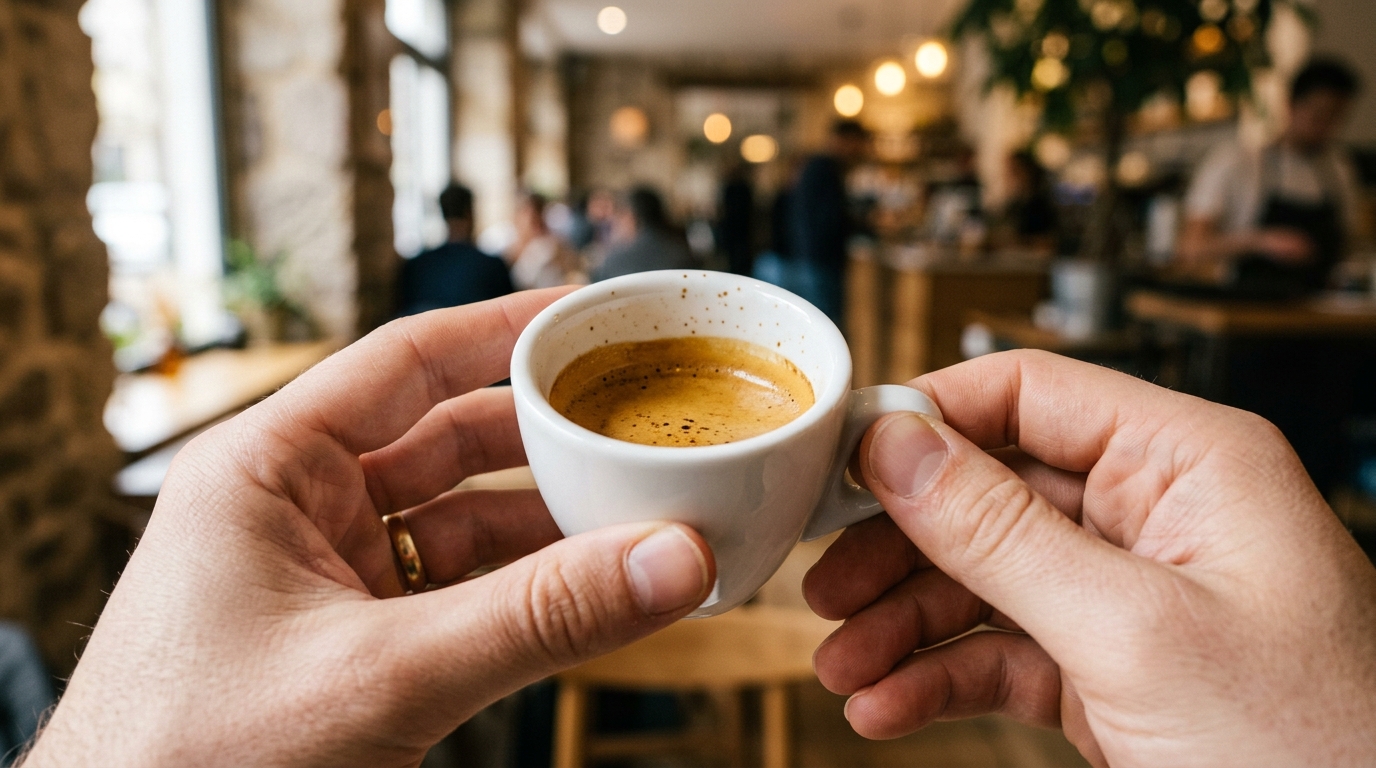
At some point, someone handed you a shot of espresso and told you it had "notes of dried cherry, dark chocolate, and a lingering hazelnut finish with a syrupy mouthfeel." You nodded, took a sip, and tasted... coffee. Strong, slightly bitter, maybe a little sweet. You weren't wrong. They weren't entirely wrong either. But somewhere between the reality in the cup and the language used to describe it, communication broke down completely.
The specialty coffee world has a vocabulary problem. The words borrowed from wine criticism are technically useful for trained palates comparing dozens of coffees in a structured setting. Applied to a casual conversation about a morning shot, they do the opposite of communicate. They alienate. And worse, they make people feel like they're missing something that may not even be there to find.
Here's what I actually believe: you can describe espresso flavor accurately, specifically, and usefully without reaching for a tasting wheel. You just need a different framework, one built around what your senses are actually detecting rather than what sounds sophisticated.
What Your Palate Is Actually Measuring
Before you can describe flavor, it helps to understand what flavor actually is. When you taste espresso, you're processing a combination of taste (what your tongue detects: sweet, sour, bitter, salty, and umami), aroma (what your olfactory system picks up retronasally as you swallow), and tactile sensation (body, texture, temperature). Most people conflate all of these into one fuzzy impression called "taste," which is why describing it precisely feels hard.
When you isolate these three channels, describing a shot becomes much more manageable. You're not trying to name a single ineffable impression. You're answering three simpler questions: What did my tongue detect? What did I smell after swallowing? How did the liquid feel in my mouth?
Talking About Taste: Anchor to the Basics
The five basic tastes are your foundation. A well-extracted shot from a washed Ethiopian coffee might be noticeably sweet with a sharp, bright sourness, low bitterness, and almost no saltiness. An over-extracted shot from a dark-roasted Brazilian blend might lead with bitterness that overpowers everything else. These aren't poetic descriptions. They're accurate ones, and they tell another person far more than "notes of berry" ever could.
If you want to go one level beyond the basics without getting precious about it, compare the sourness to something concrete. Is it like the tartness of a green apple? The milder acidity of orange juice? The sharp punch of lemon? These comparisons work because they reference a shared experience. Everyone knows what lemon tastes like. Far fewer people have calibrated opinions on "malic acidity with a citric finish."
- Sweet: does it remind you of cane sugar, brown sugar, caramel, or fruit sweetness?
- Sour: is it sharp and bright like citrus, or gentler like ripe stone fruit?
- Bitter: is it clean and short like dark chocolate, or harsh and lingering like burnt toast?
Notice that I'm still using food comparisons, but they're accessible ones. The difference between "notes of Bing cherry" and "tastes a bit like cherry juice, but more tart" is not precision. It's audience. The second description communicates to more people more reliably.
Talking About Aroma: Trust the Retronasal
Aroma is where most of the complexity lives, and it's also where people feel most lost for words. Retronasal olfaction, the smell you perceive while eating or drinking as air moves from your mouth up to your nasal cavity, contributes the majority of what we identify as "flavor." This is why a shot can taste flat when you have a cold. Your tongue is working fine. Your olfactory system is not.
The easiest way to articulate aroma without pretension is to think in categories before reaching for specifics. Is it roasty and dark? Is it floral? Is it fruit-forward? Is it earthy or herbal? These broad categories are honest and immediately informative. You can refine from there if the specific impression is clear enough. "It smells like something caramel-ish, almost like toffee" is a perfectly good description. You don't need to commit to a precise confection.
What to avoid: describing aromas that you cannot actually detect. If you can't smell jasmine in a shot, don't say you can because the bag's tasting notes said to expect it. Descriptor inflation is how the vocabulary got pretentious in the first place. Someone somewhere actually detected a faint floral quality in a washed Yirgacheffe, and through repetition it became "jasmine" and then it became something people parrot without checking their actual experience.
Talking About Body and Texture: The Underrated Dimension
Body refers to the tactile weight and viscosity of the espresso in your mouth. It is determined primarily by the concentration of dissolved and suspended solids, particularly oils and fine particles, which is why espresso, extracted at high pressure and relatively high concentration, tends to have more body than drip coffee. A shot with good body has a certain thickness or coating quality. A thin shot feels watery even if the flavor is present.
You already have language for this. Milk, water, and cream exist on a spectrum you've been navigating your whole life. Saying a shot feels "closer to cream than to water" is a precise, communicable description of body that requires zero coffee training to interpret. Alternatively, you might compare the texture to something more specific: "It's thick, almost like it coats your mouth the way whole milk does." That sentence tells me more than "syrupy mouthfeel" because syrupy implies sweetness, which is a taste, not a texture.
Describing the Finish: What Stays After You Swallow
The aftertaste, or finish, is worth paying attention to because it often changes character from the initial impression. A shot might taste sweet upfront and then leave a clean, neutral finish with no bitterness. Or it might start balanced and then linger with a dry, astringent quality that makes your mouth feel like it needs rinsing. These are real, meaningful distinctions that affect whether you want a second shot.
Plain language for the finish: How long does the taste stay? (Short finish, long finish.) Does it change? (Starts sweet, ends bitter.) Is it pleasant to sit with? (Clean, dry, harsh, smooth.) These three questions give you a complete picture without requiring any specialized vocabulary.
Putting It Together
Here's what a plain-language tasting note actually looks like in practice. Instead of: "A complex cup with vibrant berry acidity, dark chocolate body, and a lingering floral finish." Try: "This one is noticeably sweet, with a tartness that reminds me of cranberry juice rather than citrus. It feels thick in the mouth, not watery. The bitterness is low and clean, like dark chocolate rather than anything burnt, and the finish is short and neutral." That second description is longer but it is also more honest, more transferable, and more useful to anyone who wants to know what they're about to taste.
If you want to track your shots and build a personal vocabulary over time, I built grindset.cafe partly for that reason. Logging tasting notes consistently, even simple ones, trains your palate faster than any tasting course because you're correlating language to experience in real time with your own coffee.
You don't need to sound like a sommelier to be a thoughtful taster. You need to be honest about what you're actually perceiving, specific enough to be useful, and confident enough to describe it in words you'd actually use in conversation. The goal of tasting language is communication. Any word that gets in the way of that is the wrong word, no matter how technical it sounds.