
The Perfect Cortado: Achieving the Right 1:1 Espresso-to-Milk Ratio at the Correct Steaming Temperature
By the Grindset team · October 18, 2026 · 6 min read
What Actually Makes a Cortado a Cortado
The cortado gets misrepresented constantly in American coffee shops. You'll order one and receive a four-ounce drink in a stemless wine glass with latte art spiraling across the top, which is not a cortado. The word comes from the Spanish cortar, meaning to cut, as in the milk cuts the espresso. That etymology matters because it describes the function precisely: a small, equal volume of warm milk used to temper the intensity of a double espresso without fundamentally changing its character. The milk is not the point. The espresso is.
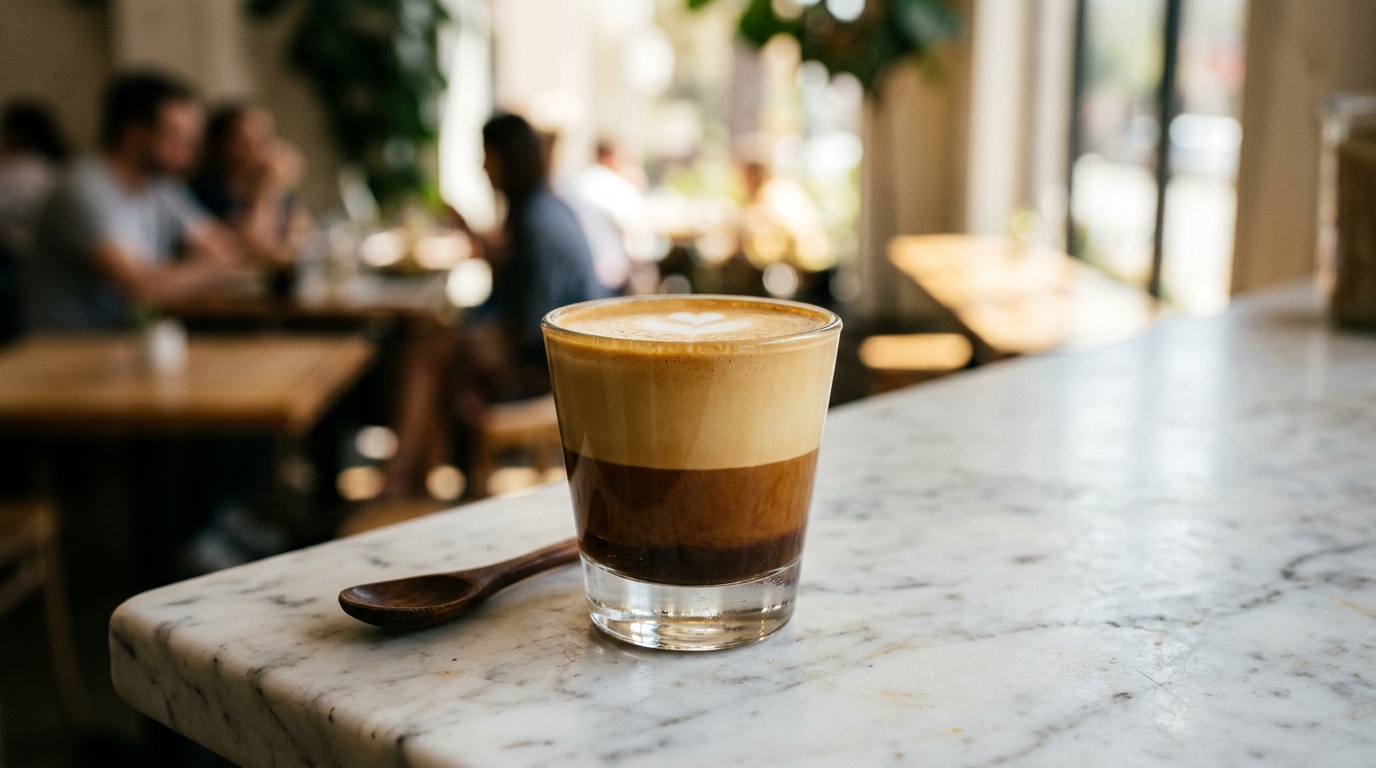
A proper cortado is built on a 1:1 espresso-to-milk ratio, meaning if you pull 40 grams of espresso (roughly 40ml by volume), you add 40ml of steamed milk. Some preparations allow a 1:1.5 ratio if the espresso is particularly intense or the customer prefers slightly less bite, but the moment you cross into 1:2 territory, you've made a small flat white, which is a fine drink but a different drink. Precision here is not pedantry. The ratio is the entire design of the beverage.
The Espresso Foundation
Before any milk touches the cup, you need a well-extracted double espresso. A typical cortado starts with 18 to 20 grams of ground coffee, extracted to a yield of 36 to 40 grams of liquid espresso, at a brew ratio of roughly 1:2 (dose to yield). Extraction temperature should sit between 200°F and 204°F (93°C to 96°C) depending on your roast level, with lighter roasts benefiting from the higher end of that range to properly solubilize the harder-to-extract compounds. Extraction time should fall between 25 and 35 seconds for most espresso blends.
The reason this matters for a cortado specifically is that the small milk volume offers almost no place to hide a mediocre shot. In a 12-ounce latte, a slightly sour or bitter pull gets masked by six or eight ounces of sweetened, textured milk. In a cortado, you have 40ml of milk working alongside 40ml of espresso. If the shot is under-extracted and acidic, you'll taste it. If it's over-extracted and bitter, that bitterness will dominate the drink. The cortado format is essentially a quality test disguised as a beverage.

Steaming Temperature: The Number That Matters Most
Milk steaming temperature is where cortados most frequently go wrong, and the error almost always runs in the same direction: too hot. The target steaming temperature for a cortado is 130°F to 140°F (54°C to 60°C). Most baristas trained on lattes default to steaming between 150°F and 160°F (65°C to 71°C), and that range, while acceptable for a larger milk drink, damages the cortado in two distinct ways.
First, proteins. Milk contains whey proteins and caseins that begin denaturing around 140°F (60°C). When these proteins unfold under heat, they change the way milk interacts with your palate. The texture becomes slightly thinner after the initial foam, and the integration between milk and espresso feels less cohesive. The lactase-sensitive sweetness that makes steamed milk pleasant around 130°F starts to diminish as you push past that threshold, replaced by a faintly cooked flavor that some people describe as scalded.
Second, in a cortado, the milk volume is so small that it cools quickly in the cup. If you steam to 155°F (68°C) thinking the drink will cool to a drinkable temperature, you've already compromised the texture and sweetness before the cup even reaches the customer. Steam to 135°F (57°C), serve immediately, and the drink lands at the perfect drinking temperature within about 30 seconds of sitting on the counter.
Texture: Microfoam, Not Froth
The cortado uses microfoam, which is steamed milk where the foam is integrated so thoroughly into the liquid that the two phases are nearly indistinguishable. You're not looking for a thick cap of foam sitting on top of the milk. That's macrofoam, and it belongs on a cappuccino. A cortado should have a glossy, paint-like surface with bubbles no larger than 0.5mm. When you swirl the pitcher, the milk should move like heavy cream, with a slight resistance and a sheen.
To achieve this at 130°F to 140°F, you need to work quickly and with a smaller pitcher. A 12-ounce frothing pitcher is too large for the 80ml of total milk you'll use. A smaller 6-ounce or 8-ounce pitcher gives you much better control over the vortex you need to create for proper microfoam integration. Position the steam wand tip just below the milk surface, angle the pitcher slightly, and introduce air for the first two to three seconds only. After that, submerge the tip and let the rolling vortex fold the foam back into the liquid. By the time the pitcher reaches 135°F (57°C), you should have a seamless, glossy texture with no visible bubbles.
Assembly and Serving Vessel
The traditional vessel is a Gibraltar glass (the Libbey 5-ounce Gibraltar rocks glass) or a small 4.5-ounce glass cup. The glass matters for practical reasons. First, you can see the drink, which lets you verify the ratio visually. Second, glass retains less heat than ceramic, which means the drink cools slightly faster, keeping the window between "too hot" and "getting cold" appropriately brief. A cortado should be consumed within about four minutes of preparation. It's not a sipping drink you nurse for twenty minutes.
Pour the espresso first, directly into the glass. Then pour the steamed milk in a single controlled motion, starting from a low height to preserve the microfoam structure. You're not trying to produce elaborate latte art here, though a simple heart or dot is fine if your pour is controlled enough. The goal is a homogenous blend where the milk and espresso integrate without stratifying. If you pour correctly, the drink should appear as a uniform caramel-brown color throughout, not a dark espresso base with white milk sitting on top.
Whole Milk vs. Alternatives
Whole milk with 3.5% fat content produces the best results in a cortado because the fat contributes to the mouthfeel and the proteins are present in the right concentration for stable microfoam. Two-percent milk can work but produces a slightly thinner texture and less sweetness. Oat milk is a reasonable alternative for non-dairy, but requires a lower steaming temperature, around 120°F to 125°F (49°C to 52°C), because many oat milk formulations foam aggressively and thin out quickly if overheated. Almond milk is difficult to microfoam properly at any temperature due to low protein content and a tendency to separate, so results will be inconsistent.
Dialing It In Consistently
The most common failure mode in making cortados at home is inconsistency. The espresso changes day to day as the beans age, the milk steaming feels different depending on how full the boiler is, and the ratio slips when you're not measuring. Using a small digital scale to verify your espresso yield, a clip-on thermometer on the pitcher, and measuring your milk volume before steaming removes most of the variables. At grindset.cafe, the logging tools are built specifically for tracking this kind of shot-by-shot data so you can correlate your variables and adjust systematically rather than guessing.
A cortado done right is a study in restraint. The ratio holds the espresso at the center of the drink, the temperature preserves the sweetness and texture of the milk, and the small format means every decision you made during extraction is fully audible in the cup. That's exactly what makes it worth getting right.