Why Fresh Coffee Beans Make or Break Your Espresso (And What "Fresh" Actually Means)
By the Grindset team · April 20, 2026 · 6 min read
The Short Version Most People Get Wrong
When coffee roasters stamp a "roasted on" date on their bags, they're not being precious or pretentious. They're telling you something chemically meaningful. Freshness in espresso isn't a marketing concept, it's a direct description of the volatile organic compounds still present in the bean, and those compounds are what create flavor, aroma, and the crema that signals a well-extracted shot. Understanding why freshness matters requires understanding what's actually happening inside a roasted coffee bean over time, and that story starts with CO2.
What Roasting Does to a Coffee Bean
During roasting, the Maillard reaction and caramelization processes transform the green bean's raw sugars and amino acids into hundreds of new aromatic compounds. Alongside this, the cellular structure of the bean undergoes significant stress, and carbon dioxide produced by the pyrolysis of organic matter becomes trapped within the bean's porous matrix. A freshly roasted bean contains somewhere between 6 and 10 milliliters of CO2 per gram, depending on roast level, and that gas doesn't just sit there passively.
CO2 degasses continuously after roasting, and this process is the clock you're working against. Lighter roasts degas more slowly because their cell structure is denser. Darker roasts, which expand more during roasting and have more fractured cell walls, release CO2 faster. This is why a light roast might need 10 to 14 days of rest before it behaves well in espresso, while a medium-dark roast might peak around 5 to 8 days off roast. These aren't arbitrary numbers, they're approximations based on when CO2 levels reach a range that allows water to actually saturate the ground coffee evenly during extraction.
Why Too Much CO2 Causes Problems
Here's the physical mechanism: when hot pressurized water contacts coffee grounds that are still extremely CO2-rich, the gas creates a barrier between the water and the soluble compounds you're trying to extract. The water channels around the gas pockets rather than permeating evenly through the puck. This produces channeling, uneven extraction, and shots that taste sour, thin, and underdeveloped despite your best efforts with grind size and dose. It's not your technique. The beans aren't ready yet.
You'll also notice that very fresh espresso produces an almost violently aggressive bloom in the portafilter. Crema forms in excess, appearing large and airy but collapsing quickly because CO2 bubbles are physically escaping the shot rather than contributing to the emulsified oil structure of a properly formed crema. Real crema, the kind that persists for 90 seconds or more, comes from a combination of CO2 and emulsified lipids extracted under pressure. Too much gas throws off that balance.
But Beans Don't Stay Good Forever Either
The other side of this equation is oxidation, and it's just as destructive as excessive CO2. Once the outgassing slows, oxygen begins its work on the same aromatic compounds that make your espresso taste interesting. The lipids in the bean, which are present at roughly 15 to 17 percent by weight in Arabica, oxidize into compounds that taste flat, papery, and stale. The lighter volatile aromatics, the ones responsible for floral or citrus notes, are especially vulnerable and can degrade significantly within two to three weeks of opening the bag.
Most specialty roasters would tell you the practical window for espresso is roughly 7 to 21 days post-roast, with the sweet spot sitting around day 10 to 15 for most medium roasts. Push past three weeks and you're not necessarily drinking bad coffee, but you're likely not tasting what the roaster intended, and you'll notice your shots becoming increasingly difficult to dial in because the predictable extraction behavior of a fresh bean has started to deteriorate.
What "Fresh" Actually Means at the Grocery Store
This is where a lot of people discover the problem. Grocery store coffee, even when sold in sealed bags with one-way valves, is almost never fresh by any standard that matters for espresso. The supply chain from roaster to distribution warehouse to store shelf typically adds four to eight weeks before a bag reaches your hands. A "best by" date stamped twelve months out from packaging tells you nothing about the roast date. It's a legal freshness designation, not a flavor quality designation.
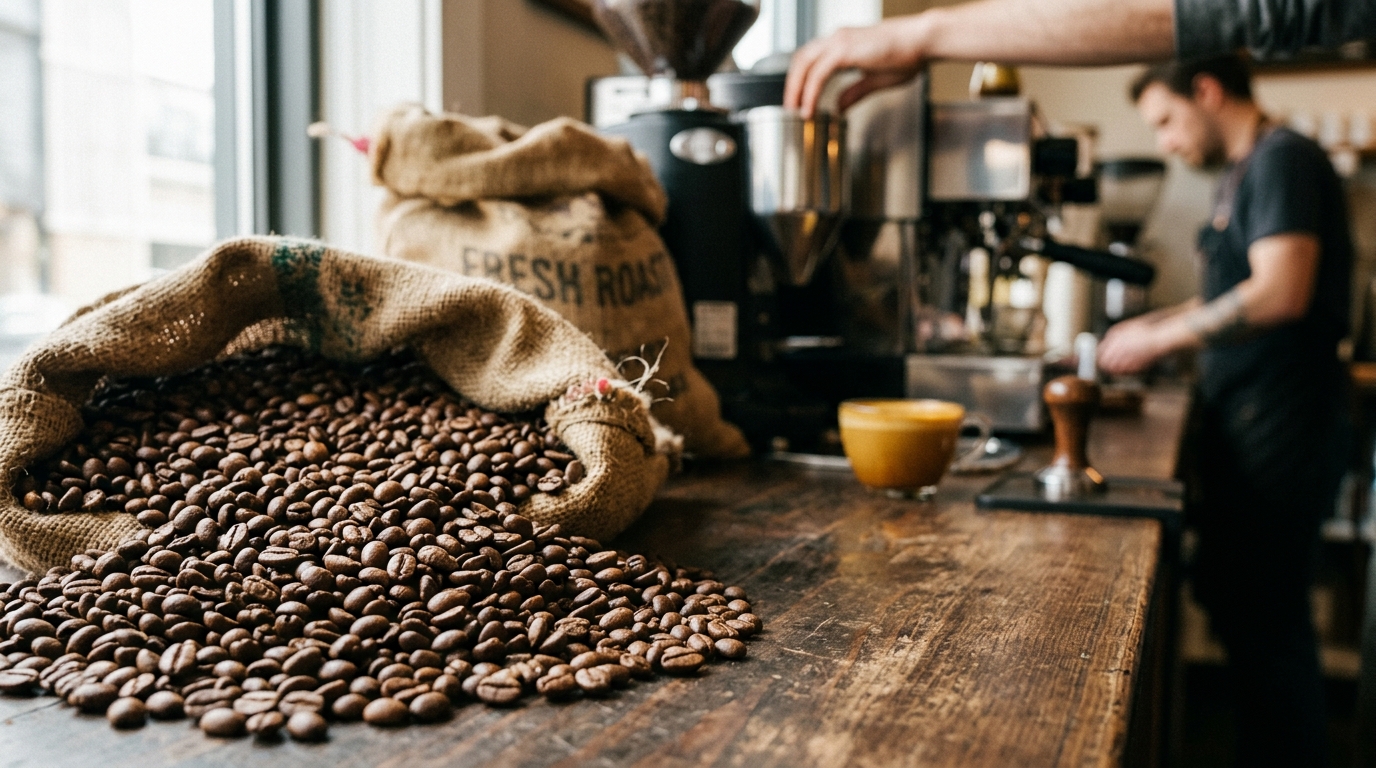
If a bag of coffee doesn't tell you when it was roasted, that omission is itself information. Roasters who are confident in their freshness advertise it. Roasters who are selling product that's already weeks old have no incentive to highlight that fact. This is why sourcing from a local roaster or a quality direct-to-consumer subscription service changes espresso results dramatically for people who have been buying off grocery shelves for years. They often assume their machine is the problem, or their grinder, when the beans they're using are simply past their useful window.
Storage Matters As Much As the Roast Date
Even perfect beans will degrade quickly if stored improperly. The enemies are heat, light, moisture, and oxygen. An airtight container at room temperature, away from direct sunlight, is sufficient for most situations when you're working through the beans within two weeks. The one-way valve bag the beans came in works well until opened. After that, transferring to an airtight canister with a CO2 valve, like an Airscape or Fellow Atmos, meaningfully slows oxidation.
Freezing is a legitimate strategy, but it has to be done correctly. The key is freezing in single-use portions, enough for three to five days of shots, in completely airtight bags with the air pressed out. You pull a portion out, let it come to room temperature without opening the bag, and then grind. The condensation risk people worry about comes from repeatedly opening and resealing a bag while it's still cold. Done properly, freezing can extend the useful life of excellent beans by months without noticeable flavor loss, which makes it practical when you find a roast you want to stock up on.
Putting This Into Practice
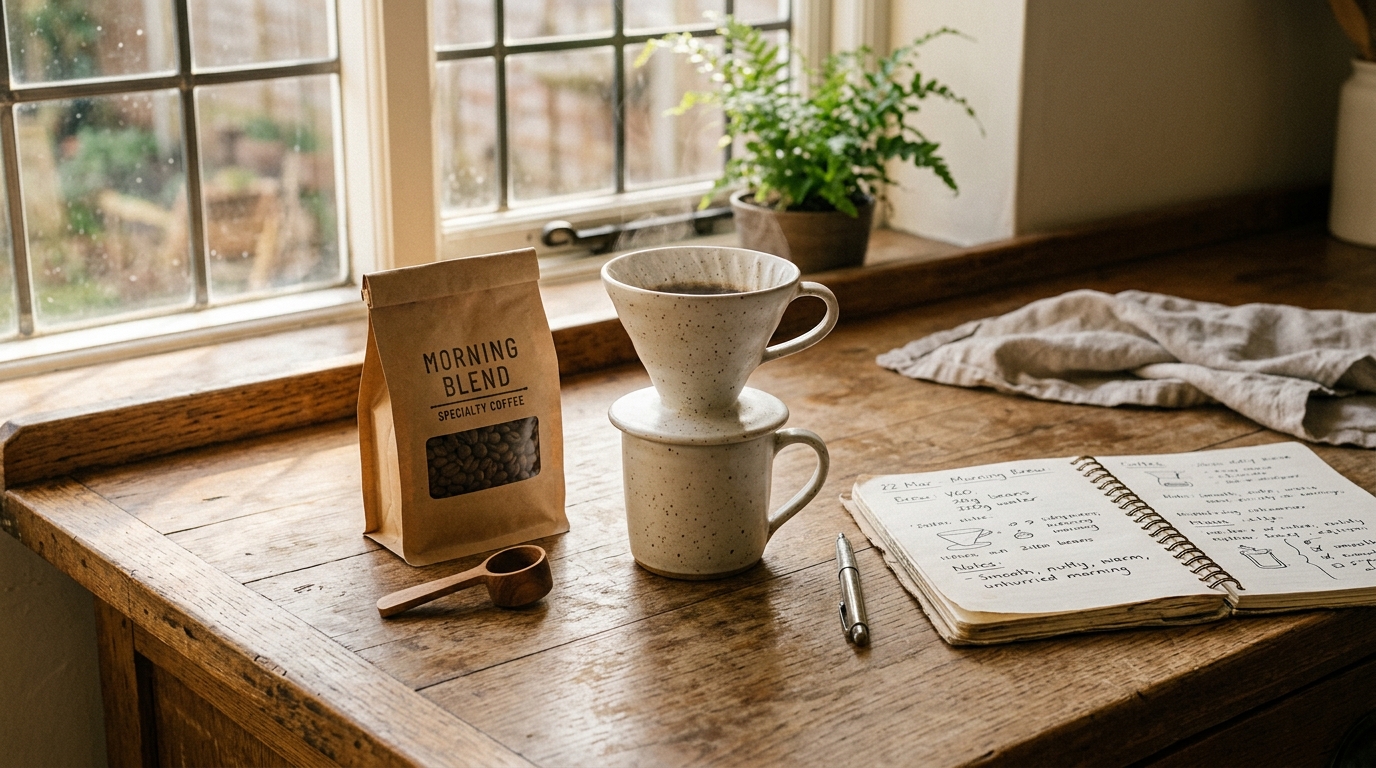
The practical implication of all this is that your espresso workflow should start before you ever touch the portafilter. When you're logging your shots and noticing that a new bag is behaving erratically, or that an older bag has lost its complexity, those observations have a chemical explanation. Tracking your roast dates alongside your shot data, something you can do in grindset.cafe alongside your other extraction notes, turns this abstract knowledge into something actionable over time.
Buy beans with a visible roast date. Give them the appropriate rest period before pulling shots. Use them within three weeks of opening. Store them properly in between. These aren't fussy habits, they're just the minimum conditions under which espresso extraction actually functions the way it's supposed to. Everything else, your grind size, your dose, your temperature, your pressure profile, all of that depends on the assumption that your beans are in the right state to begin with. Start there.