How to Diagnose and Fix Low Pressure on Your Espresso Machine: A Step-by-Step Troubleshooting Guide
By the Grindset team · April 15, 2026 · 7 min read
Why Pressure Actually Matters in Espresso Extraction
Espresso is defined, at least in part, by pressure. The standard target is 9 bars during extraction, a figure that emerged from decades of Italian espresso tradition and has since been validated by extraction science. At 9 bars, water is forced through a compacted puck of coffee at a rate and velocity that produces the emulsification of oils, the dissolution of soluble compounds, and the formation of crema that distinguishes espresso from every other brewing method. Drop that pressure significantly, and you are no longer making espresso in any meaningful sense. You are making something closer to very strong drip coffee, with a thin body, sour or flat flavor profile, and essentially no crema.
Low pressure is one of the most common problems home baristas encounter, and it can stem from a surprising number of different sources. Some are trivial to fix in five minutes. Others require tools and a bit of mechanical confidence. The key is working through the possibilities systematically rather than guessing, because replacing an OPV spring when your actual problem is grind size wastes time and money.
Start With the Obvious: Grind Size and Puck Preparation
Before you open a single panel or touch a single screw, check your grind. This is the most common cause of what feels like low pressure and the most frequently overlooked one. If your grind is too coarse, water passes through the puck with almost no resistance, and your pump never has the opportunity to build adequate pressure against the bed. You might see your shot run in 15 to 18 seconds instead of the target 25 to 30 seconds for a standard 1:2 ratio, and your pressure gauge, if you have one, will sit well below 9 bars throughout.
Tighten your grind in meaningful increments, not single clicks if you are on a stepped grinder. Watch the shot time and the pressure curve together. A properly dosed and tamped 18 gram puck in a standard 58mm basket should reach 9 bars within 5 to 8 seconds of the pump engaging, assuming your machine is functioning correctly. If it does after a grind adjustment, your machine was fine all along.
Also check your dose weight and tamp consistency. An underdosed basket or an uneven tamp creates channeling paths that bleed pressure before it can build properly. Weigh your dose every time and tamp at consistent, firm pressure straight down.
Check the Portafilter Basket for Wear or Blockage
Baskets wear out. The small holes in a basket are typically 0.2mm to 0.35mm in diameter, and over time those holes can enlarge slightly from use, cleaning, and abrasion. An older basket with worn holes will not hold pressure as effectively as a new one. If you have been using the same basket for several years with high shot volume, it is worth replacing it as a diagnostic step. A quality aftermarket basket like the IMS or VST basket costs around $30 to $50 and is a reasonable investment regardless.
Conversely, a basket can also have clogged holes from scale buildup or coffee oils, which creates irregular flow and uneven pressure distribution across the puck. Soak your basket in a solution of cafiza or similar espresso machine cleaner for 20 minutes, then rinse thoroughly and inspect the holes against a light source. Every hole should be clear.
Inspect the Group Head Gasket and Shower Screen
A worn or improperly seated group head gasket is a very common mechanical cause of low pressure. The gasket creates the seal between your portafilter and the group head. When it wears down, compresses unevenly, or cracks, water can escape around the seal rather than being directed through the puck. You might notice water weeping around the portafilter collar during extraction, which is a clear sign the gasket has failed.
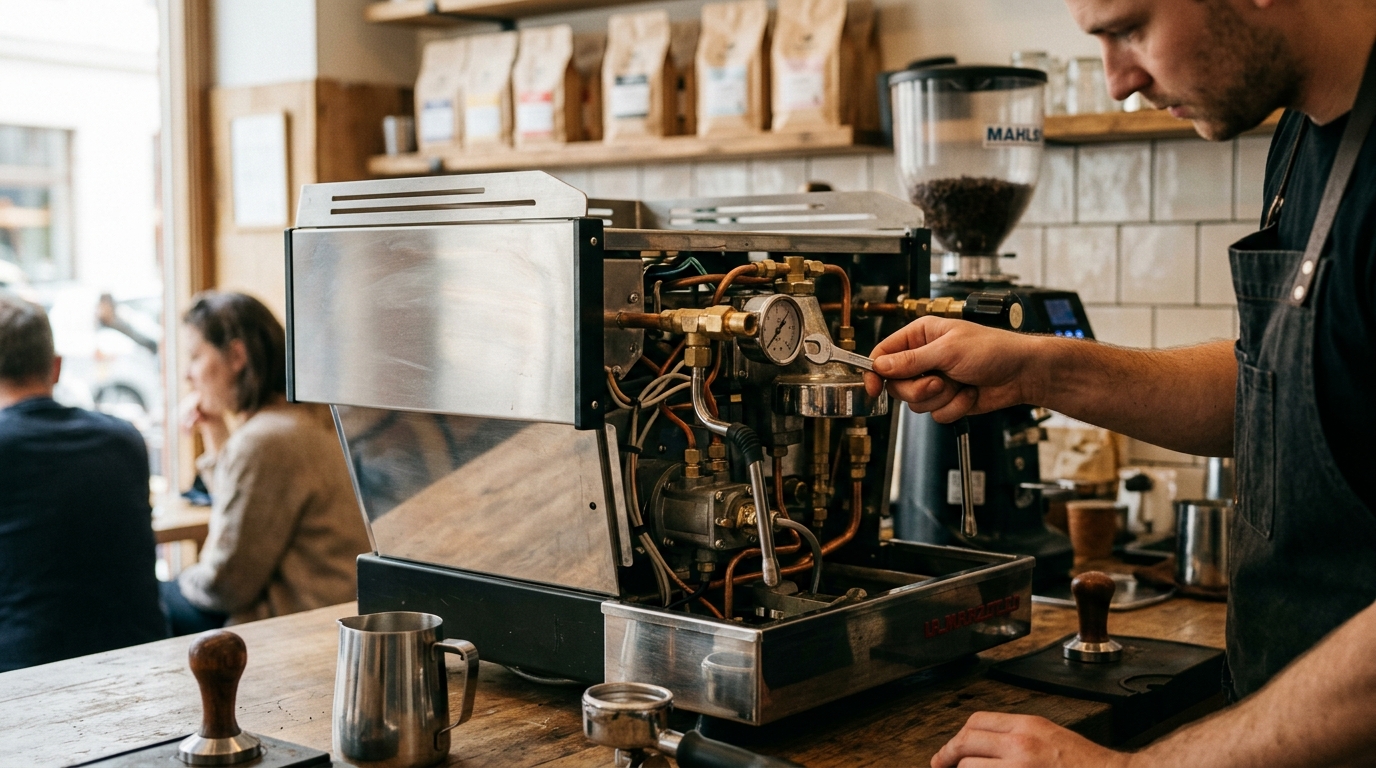
Replacing a group gasket is one of the simpler maintenance tasks on most home machines. The gasket sits in a groove inside the group head and can usually be removed with a flathead screwdriver or a pick. Replacement gaskets are machine-specific, so note your machine model and order the correct diameter and thickness. On most E61 group machines, the standard gasket is 8.5mm thick when new and should be replaced when it compresses below roughly 7mm or shows visible cracking. After fitting a new gasket, run 3 to 4 blank shots to seat it before pulling coffee.
While you have the portafilter off, remove and clean the shower screen as well. A clogged shower screen restricts flow before water even reaches the puck, which affects both pressure and extraction evenness. Unscrew it, soak it in cleaner, scrub with a brush, and reinstall.
Test and Adjust the Over-Pressure Valve
The over-pressure valve, commonly called the OPV, is a spring-loaded relief valve that limits maximum pump pressure. On most home machines, it is factory set somewhere between 9 and 12 bars, though many machines ship from the factory set higher than ideal. If the OPV spring weakens over time, or if the valve seat becomes fouled with scale or debris, it can open prematurely and bleed off pressure before your puck ever sees it.
To test whether your OPV is the culprit, you need a pressure gauge. If your machine has a built-in gauge, watch it during a blind shot with no coffee. The pump should push water through the group and your gauge should read whatever your OPV is set to, since there is no puck resistance. If it reads significantly below 9 bars on a blind shot, the OPV or the pump itself is likely the issue. Many home baristas add an inline pressure gauge or a gauge-equipped portafilter specifically to diagnose situations like this.
Adjusting the OPV involves locating the valve, typically on the pump outlet line or integrated into the pump body itself, and turning an adjustment screw to increase or decrease spring tension. Clockwise typically increases pressure on most designs. Make small adjustments, a quarter turn at a time, and test between each adjustment. Target 9 bars at the group during extraction, not on a blind shot, since the resistance of the coffee puck is what you are actually calibrating against.
Consider the Pump Itself
If grind, gaskets, basket, and OPV all check out, the pump is your next suspect. Most home espresso machines use a vibratory pump, specifically the Ulka EP5 or similar models rated at 15 bars maximum. These pumps have a service life of roughly 500 to 1,000 hours and do wear out, particularly in hard water environments where scale accumulates internally.
A weakening pump will produce lower pressure across the board and often sounds different than a healthy one, sometimes quieter or with an inconsistent buzz rather than a steady hum. Replacing a vibratory pump is within reach for anyone comfortable with basic appliance repair. Disconnect power, drain the machine, swap the inlet and outlet connections to the new pump, and reassemble. Pumps for common home machines typically cost $30 to $60.
Scale is also worth addressing here. If you live in a hard water area and have not descaled your machine in 6 months or more, scale buildup in the boiler, lines, or pump can restrict flow severely. Run a full descale cycle with citric acid solution at 1 gram per 100ml of water, following your machine's specific descaling procedure.
Keeping Track of What You've Tried
Troubleshooting pressure issues works best when you are methodical and document what you change and observe. If you are tracking shot parameters anyway, noting pressure readings alongside yield, time, and ratio gives you a baseline to compare against when something changes. I built grindset.cafe partly because I kept losing track of my own shot logs and wanted a better way to see patterns over time, including the kind of gradual pressure drift that happens when a gasket or OPV starts to go.
Low pressure is almost always fixable without sending a machine in for service, provided you work through the possibilities in order. Start with the variables you control before you assume the machine is broken. More often than not