The Perfect Espresso Ratio for Beginners: Why 1:2 Is Your Best Starting Point
By the Grindset team · June 1, 2026 · 6 min read
What Even Is an Espresso Ratio?
Before anything else, let's establish what we mean by ratio in the context of espresso. The brew ratio is the relationship between the dry weight of ground coffee you put into the portafilter (the dose) and the weight of liquid espresso you extract into the cup (the yield). If you grind 18 grams of coffee and pull 36 grams of liquid espresso, you have a 1:2 ratio. That's it. Simple arithmetic, but the implications run surprisingly deep.
The reason we talk in ratios rather than fixed volumes is that espresso is dense with dissolved solids, and the concentration of your shot changes dramatically depending on how much liquid you pull through a fixed amount of coffee. Pull 20 grams of liquid from 18 grams of coffee and you have a syrupy, concentrated ristretto at roughly 1:1.1. Pull 72 grams and you're approaching lungo territory at 1:4, where the shot will taste thin and bitter. The ratio is the single number that tells you where you are on that spectrum, which is why it matters more than volume.
Most beginner resources talk about espresso in fluid ounces or tell you to fill the cup "about halfway." That advice is imprecise to the point of being useless. Two different coffees dosed at 18 grams can produce the same fluid volume with wildly different weights because crema density and dissolved solids vary. Weigh your yield. Always.
Why 1:2 Is the Right Place to Start
A 1:2 ratio, typically something like 18 grams in and 36 grams out, sits in the middle of the traditional espresso range and has been the default target in specialty coffee for good reason. At this ratio, you're extracting enough solubles to get full sweetness, acidity, and body without pushing into the over-extracted range where harsh, bitter compounds dominate. The Specialty Coffee Association's brewing guidelines put optimal extraction yield between 18% and 22% of the coffee's total soluble mass, and a 1:2 ratio with a well-calibrated grind and water temperature around 200°F (93°C) lands comfortably within that window for most medium to medium-dark roasts.
There's a physical reason this range works so well. In the early phase of extraction, water dissolves the most soluble compounds first: fruity acids, sugars, and aromatic molecules. As extraction continues, the less soluble compounds come out, including the bitter chlorogenic acid breakdown products and certain phenols that give over-extracted espresso its harsh, drying finish. A 1:2 ratio, with a shot time of roughly 25 to 30 seconds, hits the sweet spot where you've pulled enough of the good stuff without opening the door too wide to the unpleasant compounds. Ristrettos at 1:1 or 1:1.5 can taste intense and sweet, but they're less forgiving of grind inconsistency. Lungos at 1:3 or beyond require precise grind calibration to avoid bitterness. The 1:2 is more forgiving on both ends of that dial, which is exactly what a beginner needs.
How to Actually Hit a 1:2 Ratio
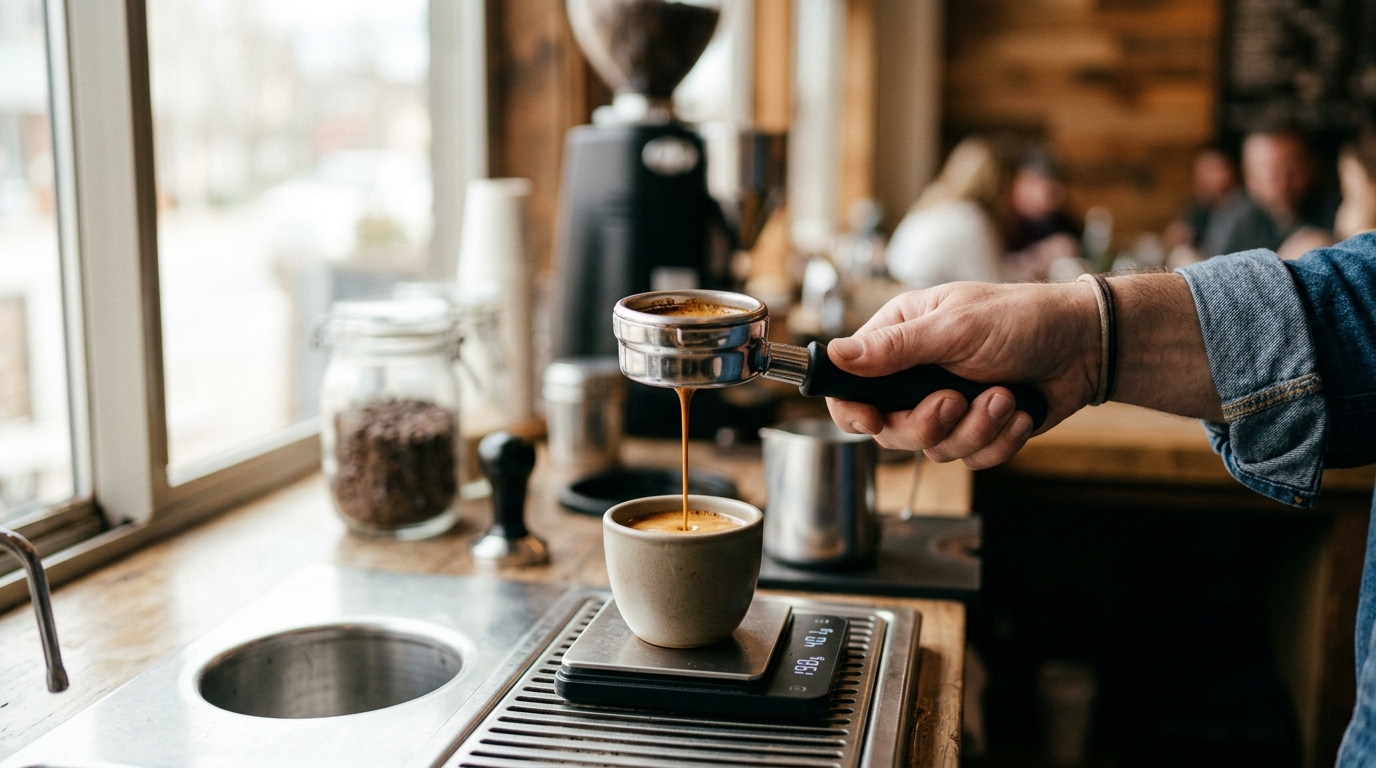
You need a scale. Not a kitchen scale that measures in 5-gram increments, but a scale accurate to 0.1 grams, ideally one that fits under your portafilter and cup simultaneously. You can find decent options for under $30, and it is the single most impactful piece of equipment you can add after the machine and grinder.
The workflow is straightforward:
- Weigh your dry dose before grinding. A common starting point is 18 grams for a standard double basket.
- Tare the scale with your cup on it, then start your shot.
- Stop the extraction when the liquid weight in the cup reaches 36 grams.
- Record your shot time. If it landed between 25 and 30 seconds, your grind size is in the right ballpark.
If your 36 grams came out in 18 seconds, your grind is too coarse. Water moved through the puck too fast, and you likely under-extracted. The shot will taste sour, thin, or grassy. Go finer. If it took 45 seconds to reach 36 grams, the grind is too fine, the puck restricted flow too aggressively, and you probably over-extracted into bitter territory. Go coarser. The ratio and the time work together: hitting 1:2 in 25 to 30 seconds means your grind size is calibrated correctly for that coffee at that dose.
When 1:2 Is Not the Answer
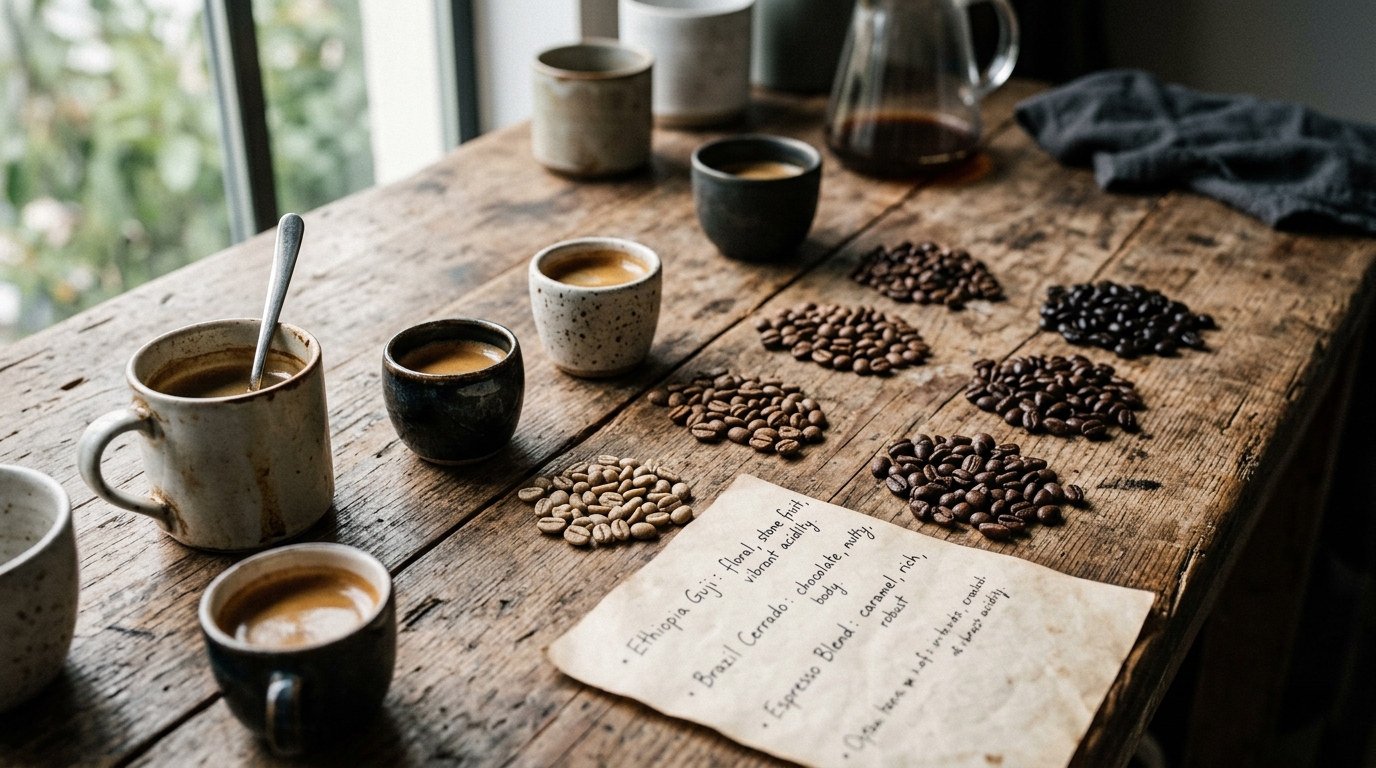
Once you've dialed in the mechanics at 1:2, it's worth knowing when and why you might deliberately deviate from it. Light roasts, particularly those with very high density and low solubility, often respond better to slightly longer ratios in the 1:2.5 to 1:3 range. The harder cell structure of a light roast requires more water contact time to release its solubles fully, and a longer ratio effectively allows more extraction without simply making the shot bitter. Pulling a light roast at 1:2 with the same parameters you'd use for a medium roast often produces a sour, underdeveloped result.
On the other end, some naturally processed coffees or very dark roasts can taste muddled or hollow at 1:2 and actually clean up and become more expressive at 1:1.5 or 1:1.8. This is less common but worth experimenting with if a coffee keeps tasting off despite correct shot times. The point is that 1:2 is a starting point, not a commandment.
The Variables That Interact With Ratio
Ratio does not operate in isolation. Your water temperature, grind size, distribution technique, and even the freshness of the coffee all interact with how a given ratio extracts. Water at 205°F (96°C) will extract more aggressively than water at 197°F (92°C) from the same dose and yield, meaning the same 1:2 ratio can produce noticeably different cups depending on your machine's temperature stability. Most home machines running at a single boiler temperature between 198°F and 202°F (92°C to 94°C) will work fine as a baseline.
Tamping pressure, while less critical than many people think once you're past a consistent baseline of around 30 pounds, affects puck resistance and therefore shot time. An unevenly distributed puck causes channeling, where water finds paths of least resistance through the coffee bed, and channeling destroys your ability to use shot time as a reliable diagnostic. You can be hitting 36 grams in 27 seconds while channeling severely, and the shot will still taste awful. Consistent distribution and tamping matter because they make your ratio and time data meaningful.
Tracking Your Shots Over Time
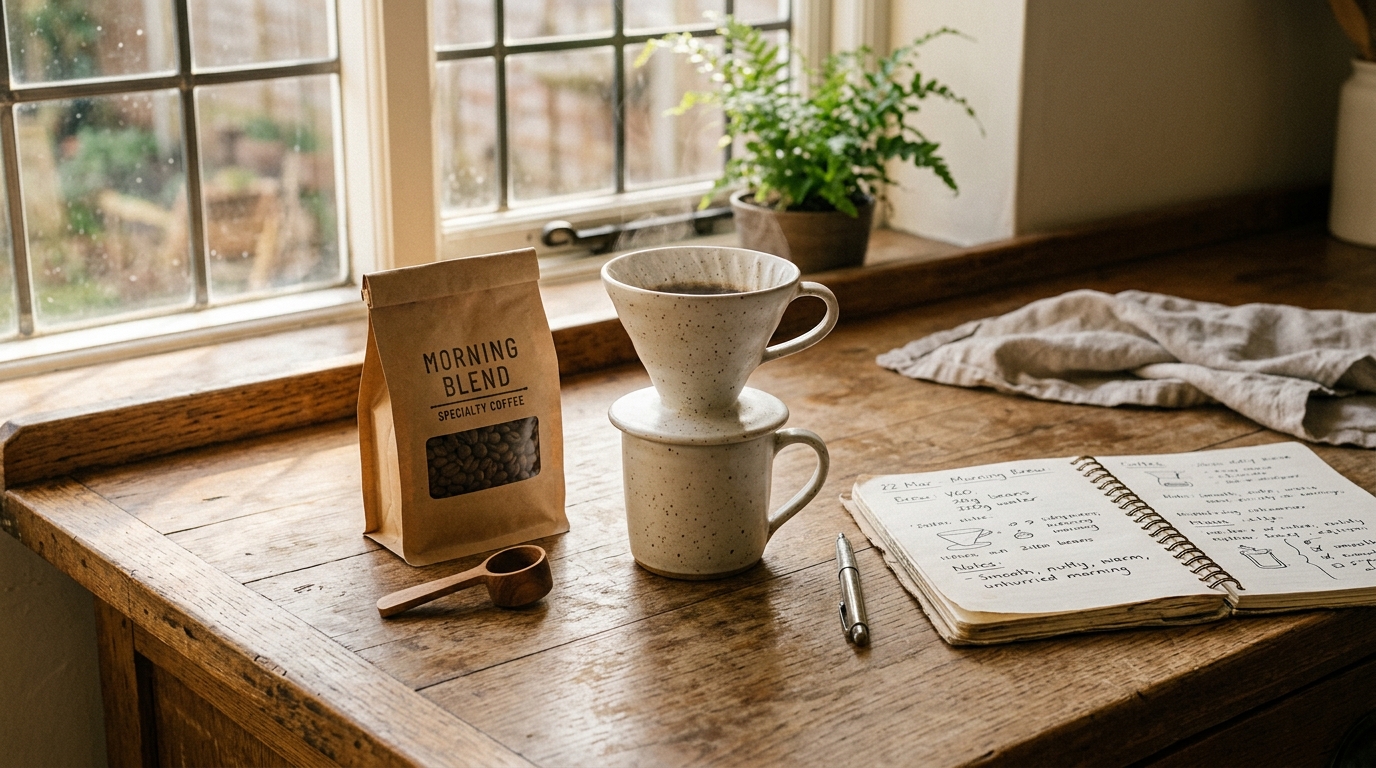
One of the most useful habits you can build early is writing down your variables after each pull. Dose, yield, time, grind setting, and a brief tasting note. It sounds like extra work, but espresso calibration is iterative, and your memory of "that shot I pulled three days ago" is not reliable enough to be useful. If you want a structured way to do this, grindset.cafe is built specifically for tracking espresso shots so you can actually learn from your data rather than repeating the same mistakes.
Start at 1:2. Dial in your grind to hit that ratio in 25 to 30 seconds. Taste the result. Then, once you understand what a well-extracted shot at that ratio tastes like, you have a reference point from which every other experiment becomes meaningful. Ratio is not a constraint on creativity. It's the baseline that makes creativity possible.