How to Taste Espresso Like a Professional Barista: A Step-by-Step Sensory Guide
By the Grindset team · July 10, 2026 · 6 min read
Why Tasting Matters More Than You Think
Most people drink espresso. Fewer people actually taste it. The difference is not about pretension or ritual for its own sake. It is about building a feedback loop between what is in your cup and the variables you can control at your machine. If you cannot articulate what you are tasting, you cannot diagnose what went wrong with your extraction, and you cannot make the adjustments that lead to better shots. Tasting with intention is the core skill that separates someone who pulls espresso from someone who understands it.
Professional baristas at competitions and quality-control labs use a structured sensory framework borrowed partly from coffee cupping protocols and partly from wine and spirits evaluation. You do not need to enter a competition to benefit from this framework. You just need to slow down, pay attention in the right sequence, and know what you are actually looking for.
Set the Conditions Before You Sip
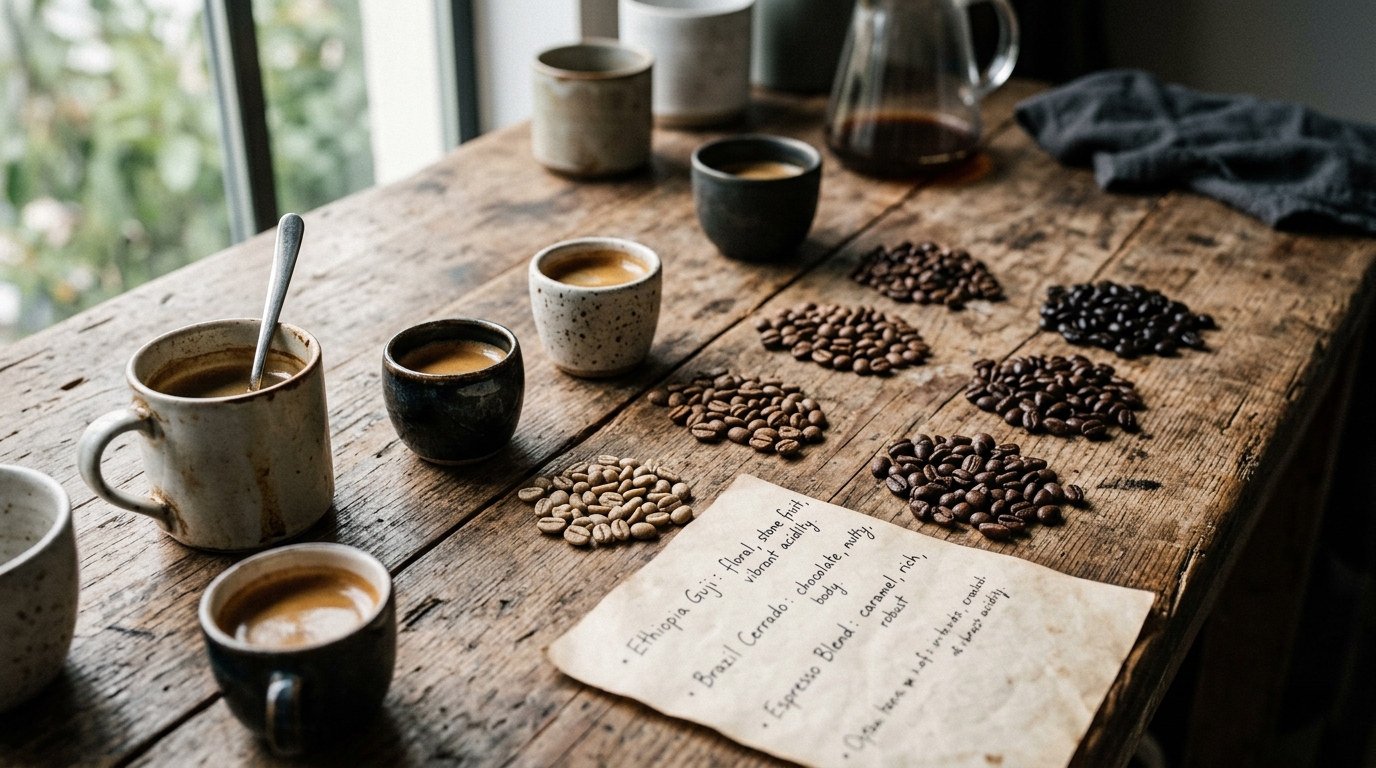
Sensory evaluation is easily contaminated. Your palate is a measuring instrument, and like any instrument, it needs to be calibrated before use. Avoid eating strongly flavored food for at least 30 minutes before a serious tasting session. Coffee itself will suppress your ability to detect subtle notes after three or four shots, so if you are evaluating multiple espressos, rinse between samples with plain water and consider unsalted crackers to reset your palate. Temperature also matters more than most people realize. Espresso served at around 149 to 158 degrees Fahrenheit (65 to 70 degrees Celsius) will taste very different from the same shot at 120 degrees Fahrenheit (49 degrees Celsius), and many aromatic compounds are far more volatile and detectable when the liquid is warm but not scalding. Plan to evaluate aroma immediately, then taste as the shot passes through that 130 to 140 degree Fahrenheit range (54 to 60 degrees Celsius) where sweetness and acidity tend to become most legible.
Step One: Evaluate the Crema
Crema is not a quality indicator in itself, but it carries information. A reddish-brown layer with fine, stable bubbles generally suggests good emulsification of CO2 during extraction. Very pale crema can indicate underextraction or very fresh beans that have not degassed adequately. Dark, almost black crema often points to overextraction or a roast that is darker than the extraction parameters were designed for. Before you stir or sip, look at how the crema holds together over about 60 to 90 seconds. Crema that dissipates almost immediately can indicate stale coffee or a significant pressure deficit during the shot.
Then swirl the cup gently and bring it close to your nose. The aroma you detect before tasting sets a frame of reference. You might pick up floral top notes from high-altitude washed Ethiopian coffees, stone fruit from a natural-processed lot, or roasty, bittersweet chocolate characteristics from a darker-roasted blend. Write down what you smell before you taste. Once you introduce liquid to your palate, the aromatic experience shifts significantly.
Step Two: Taste in Sequence, Not All at Once
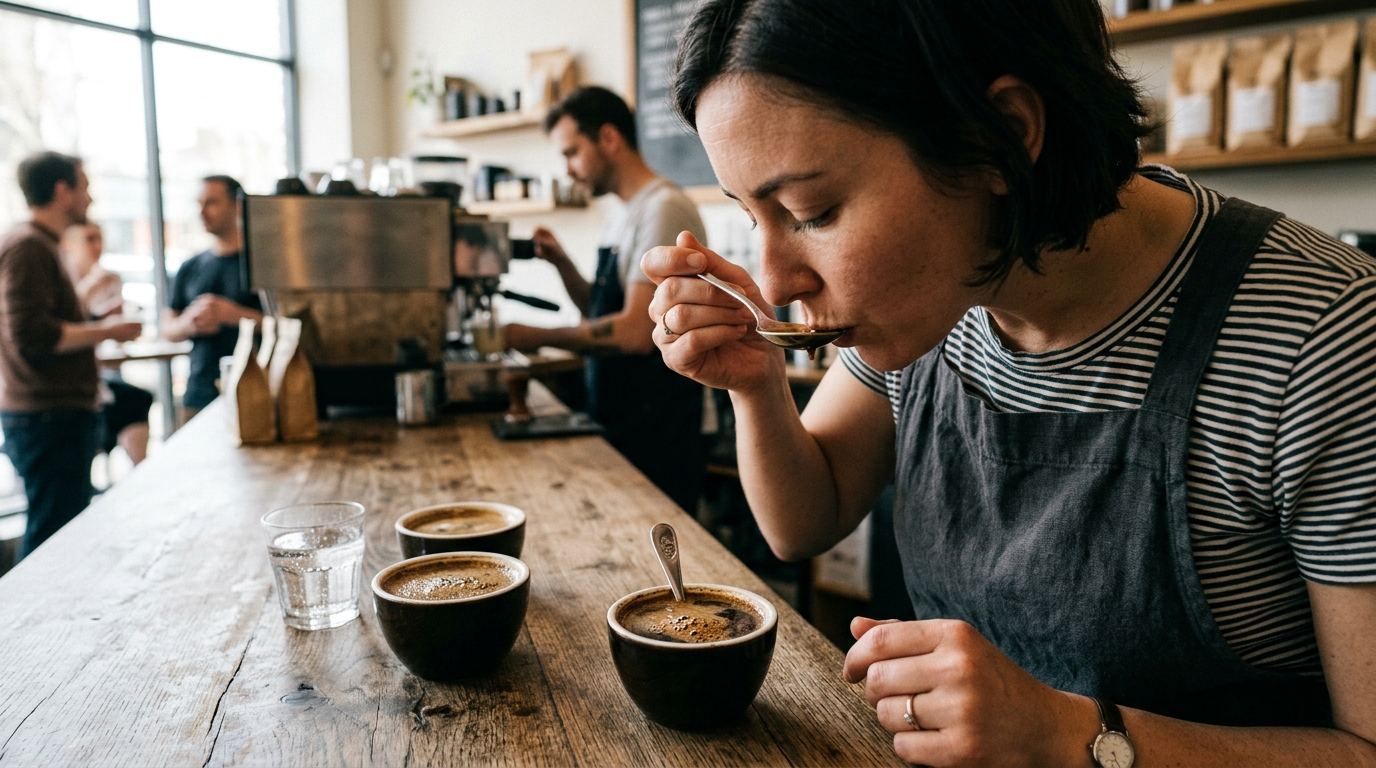
The first sip should be small. Cover as much of your tongue as possible by spreading the liquid across the surface before swallowing. Your tongue detects sweetness primarily at the tip, acidity along the sides and upper edges, and bitterness at the back and base. Saltiness, which is often a positive contributor to balance in espresso, registers broadly. The goal is not to identify every individual flavor compound in isolation but to understand how these primary tastes interact and which one is most dominant.
On a second, slightly larger sip, focus specifically on acidity. Good espresso acidity is bright and clean, similar to the tartness of a green apple or citrus fruit. It should be vivid without being harsh. Sour and acidic are not the same thing, and this distinction is critical. Sourness in espresso typically results from underextraction, where organic acids are pulled early in the shot but the sweeter, more complex compounds have not yet dissolved into solution. Genuine, well-developed acidity from a well-extracted single origin, by contrast, has a clean lift and resolution. If the acidity makes you wince and there is no sweetness to balance it, you are likely tasting underextraction.
On a third sip, pay attention to bitterness and how it resolves. Some bitterness is expected and contributes structure. The question is whether it is pleasant bitterness, like dark chocolate at 70 percent cacao, or harsh bitterness, like scorched wood or cigarette ash. The latter is a sign of overextraction, where high-molecular-weight compounds like chlorogenic acid degradation products are contributing astringency and an unpleasant, lingering burn.
Step Three: Assess Body and Texture
Body is a tactile quality, not a flavor. It refers to the weight and viscosity of the liquid on your tongue and palate. Espresso that was pulled at a 1:2 ratio (18 grams in to 36 grams out) over about 28 to 32 seconds will typically have a heavier, more syrupy body than a 1:3 lungo-style shot pulled at the same dose. High-pressure extraction emulsifies oils from the coffee grounds into the liquid, which contributes directly to perceived body. A shot that tastes thin and watery despite a reasonable flavor profile might suggest your grind is too coarse, your temperature too low, or your coffee is simply too stale to contribute adequate dissolved solids.
Mouthfeel also includes texture. Espresso can feel silky, creamy, rough, or astringent. Astringency is a drying, almost grippy sensation that results from tannin-like compounds binding to salivary proteins. It is distinct from bitterness, though the two often appear together in overextracted shots. If your espresso leaves your mouth feeling parched rather than pleasantly coated, that is a sign something went wrong with extraction temperature (too high is a common culprit), contact time, or grind distribution.
Step Four: Evaluate the Finish
The finish, or aftertaste, tells you a great deal about extraction quality. A well-extracted espresso leaves a clean, sweet, or subtly fruity resonance that persists for 30 to 60 seconds after swallowing. A finish that is sharp, acrid, or that turns progressively more bitter over time suggests compounds that should not have been extracted made it into the cup. Pay attention to whether the aftertaste fades gracefully or harshens as it lingers.
One practical test: wait 90 seconds after your final sip and check your palate. If you are still experiencing a pleasant, clean sweetness, your extraction was likely in a good range. If the primary remaining sensation is a dry, bitter coating at the back of your throat, you have work to do on your recipe.
Building a Personal Reference Library
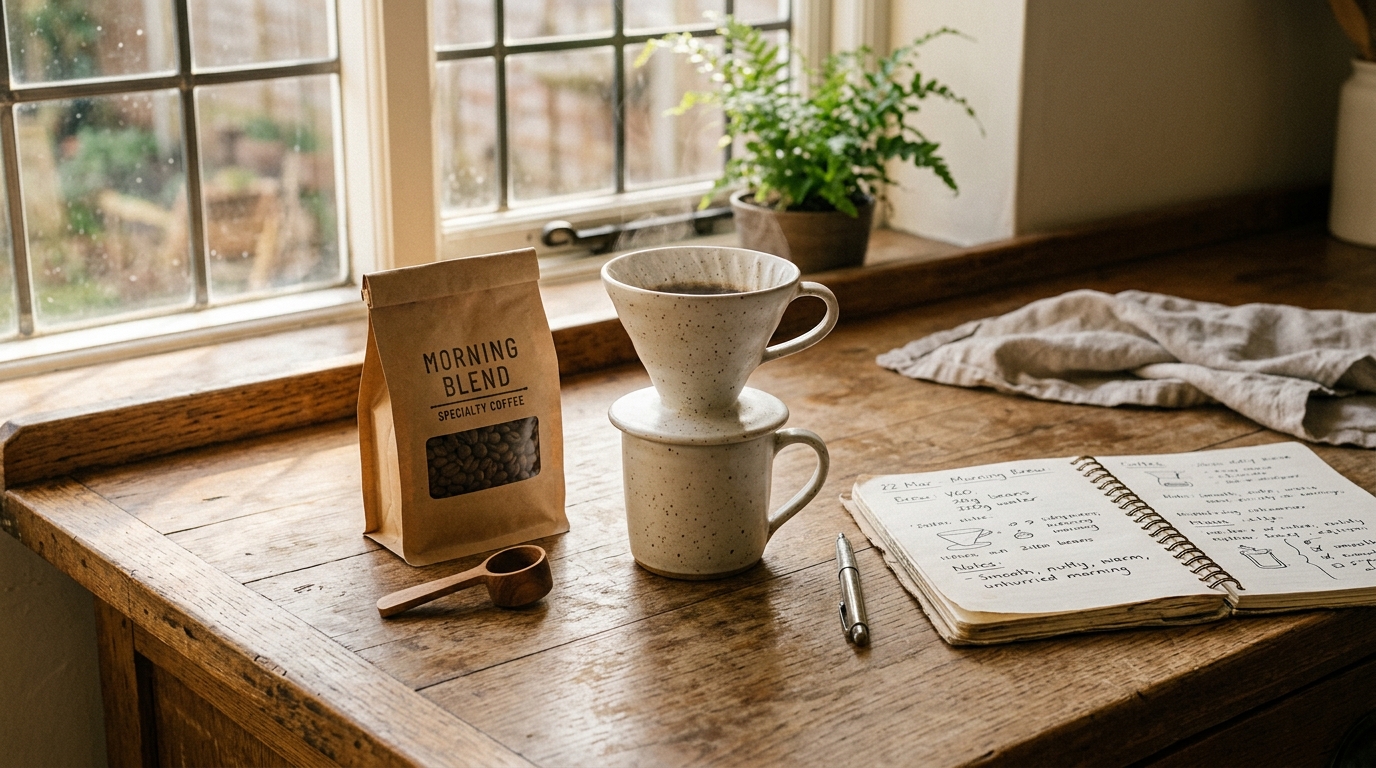
The single most useful thing you can do after structured tasting is write it down. Note your dose, yield, time, temperature, and grind setting alongside your sensory observations. Over dozens of shots, patterns emerge. You start to learn what your specific grinder does to a particular coffee, how temperature shifts of just 2 degrees Fahrenheit (about 1 degree Celsius) affect perceived acidity, and what a 30-second extraction versus a 24-second one tastes like in your actual setup. This is not abstract knowledge. It is directly actionable information tied to variables you can change at your next pull.
If you want a structured place to track this kind of data shot by shot, grindset.cafe is built specifically for that kind of systematic espresso logging. But even a simple notebook will move you forward faster than tasting in an unstructured way and hoping your intuition fills in the gaps.
The reward for taking tasting seriously is not sounding more informed at a coffee bar. It is the direct mechanical feedback that helps you pull better espresso at home, consistently, because you understand what the cup is actually telling you.