How to Season a New Espresso Grinder: Breaking In Your Burrs for Better-Tasting Coffee
By the Grindset team · June 10, 2026 · 6 min read
Why New Burrs Need Time Before They Perform
When you unbox a new espresso grinder, the burrs inside are machined to tight tolerances but are still essentially raw metal. The cutting edges are sharp in an uneven, almost jagged way at the microscopic level. Steel burrs in particular come off the production line with small burrs (in the metallurgical sense) and micro-irregularities along the teeth that affect how they contact and fracture coffee. Until those surfaces wear into each other and develop consistent contact patterns, your grind particle distribution will be wider and less predictable than it will eventually become. This is not a flaw in the grinder. It is a normal stage in the life of any burr set.
The practical consequence is that coffee ground through unseasoned burrs tends to taste flat, muted, or sour in ways that resist dialing in. You can chase the extraction curve forever, adjusting grind size, dose, and temperature, and still feel like the shots are fighting you. Understanding that the problem is the burrs themselves, not your technique, saves a lot of frustration during those first few weeks.
What Seasoning Actually Does at the Burr Surface
Seasoning, sometimes called burr break-in or conditioning, is the process of running a significant volume of coffee through the grinder to wear the burr faces into consistent alignment. As the burrs grind, the highest contact points on both the stationary and rotating burr wear down first. Coffee oils also deposit into the micro-pores of the steel, which slightly reduces static and helps particles release more cleanly. Over time, the two burr surfaces develop a matched wear pattern, the gap geometry becomes more uniform across the full circumference, and the particle size distribution tightens toward a predictable curve.
Ceramic burrs season more slowly than steel because the material wears at a much lower rate. Steel burrs from most flat burr espresso grinders, like those running 64mm or 83mm flat sets, typically reach a usable baseline after 3 to 5 pounds (roughly 1.3 to 2.3 kg) of coffee. Conical steel burrs, which have a different contact geometry and longer cutting path, often need slightly less volume before they stabilize, typically around 2 to 3 pounds. These are rough estimates. Some burr sets from manufacturers with tighter production tolerances feel noticeably better after just a pound, while others need closer to 8 pounds before extraction feels truly dialed.
The Right Way to Season: Rice, Cheap Coffee, or Good Coffee?
The debate about what to use for seasoning comes up constantly, and it is worth settling clearly. Some people recommend running rice or popcorn kernels through the grinder because they are cheap and available. Do not do this. Rice is significantly harder than coffee at comparable grind settings and can chip or accelerate uneven wear on precision-machined steel. Popcorn is similarly problematic. Your burrs are designed to process coffee. The wear patterns that develop during seasoning should come from coffee-sized particles at coffee-relevant hardness, or the resulting contact geometry will not match what you actually need for espresso extraction.
The more practical question is whether to use cheap, expendable coffee or your good single-origin bags. The answer depends on how patient you are. Using inexpensive commodity espresso beans, something around $8 to $12 per pound, lets you run the full seasoning volume without regret. You are not trying to taste these shots carefully. You are accumulating grinding cycles. Set your grinder to your approximate espresso range, around 200 to 400 microns depending on the grinder, and grind. Pull shots if you want, but do not stress about dialing them in yet. You are just putting kilometers on the burrs.
Some experienced home baristas do prefer to season with their regular coffee, reasoning that the oils from higher-quality beans season the burrs slightly differently. There is not strong evidence that this matters at the scale of home use, and the cost difference makes it hard to justify.
A Practical Seasoning Protocol
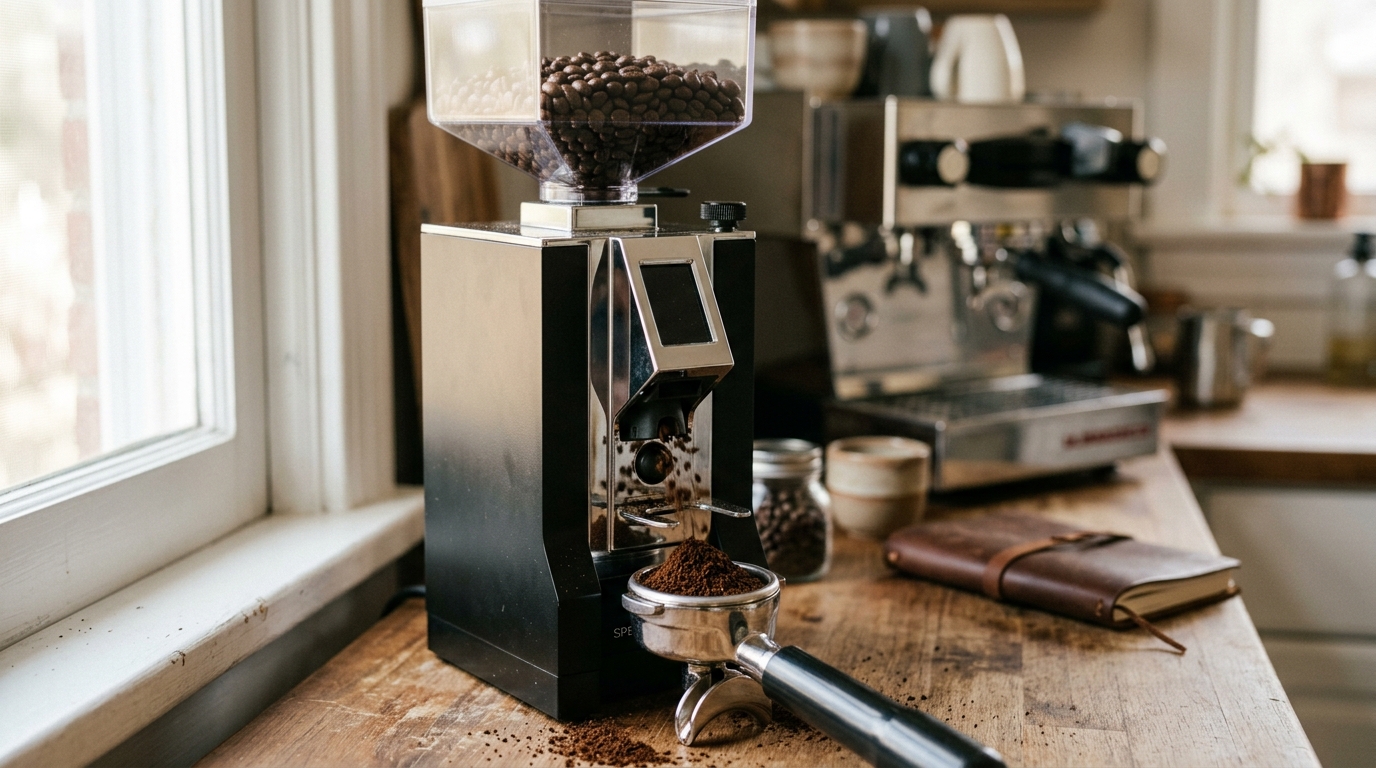
Here is a straightforward approach that works for most home espresso grinders with flat or conical steel burrs in the 40mm to 83mm range:
- Set your grinder to your normal espresso grind setting, roughly where you expect to land for an 18 to 20 gram dose pulling in 25 to 35 seconds at 9 bar.
- Grind 500 grams of inexpensive espresso beans as a baseline first session. Pull shots if you want, but taste without expectation.
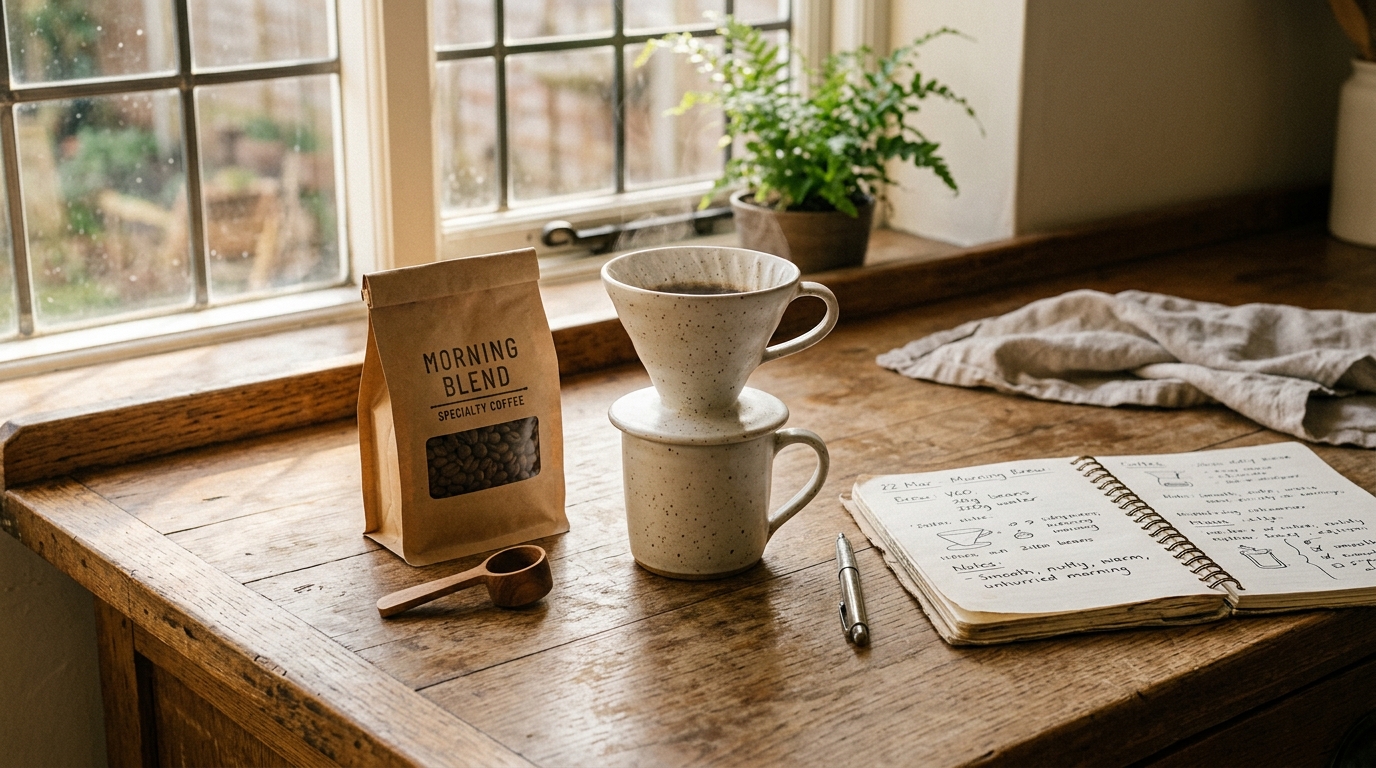
- Continue grinding daily at your normal dose. Log your shots: dose in grams, yield in grams, time in seconds, and a brief taste note.
- Repeat until you have processed at least 1.5 kg total. For larger flat burr grinders like 83mm sets, push toward 3 kg before drawing conclusions about the grinder's character.
- After the initial volume, recalibrate your grind setting. Many grinders will need a slightly finer setting post-seasoning because the burrs have worn to a closer true gap than the factory alignment assumed.
The recalibration step catches people off guard. If your shots suddenly start running fast after a few weeks of consistent grinding, the burrs closing in is often the reason. This is expected behavior, not a sign something went wrong.
How to Know When Seasoning Is Complete
There is no single moment where the grinder announces it is ready. Instead, you will notice that the shots become easier to dial in and the adjustments you make produce more predictable results. The espresso itself will have more clarity in the cup, better separation of sweetness and acidity, and a more stable crema formation. Sour or thin shots that resist your adjustments will become less common.
Practically, the most reliable indicator is grind retention behavior stabilizing. Many grinders will retain varying amounts of coffee in the chute and burr chamber during break-in. Once retention settles to a consistent number, often within 0.1 to 0.3 grams shot to shot on a well-designed single-dose grinder, the burrs are likely bedded in.
Keeping a Log Makes the Process Useful
The seasoning period is actually one of the best times to start keeping careful shot notes, because you are watching a controlled variable change over time. The coffee stays the same, the technique stays roughly the same, and the grinder improves. Seeing that progression in your own data builds real intuition about how your specific setup responds. If you are looking for a structured way to track this, grindset.cafe is built around exactly that kind of shot logging, connecting grind parameters to extraction outcomes over time.
Running a new grinder without patience is the most common mistake. The burrs are not done yet. Give them the volume they need, use real coffee, keep notes, and resist the urge to judge the grinder's ceiling until it has earned its baseline.