How to Log Your Espresso Shots (And Why Keeping a Simple Record Leads to Better Coffee)
By the Grindset team · March 20, 2026 · 6 min read
The Problem With Pulling Shots From Memory
Most home baristas and plenty of experienced ones operate on a kind of fuzzy intuition. You pull a shot, it tastes a little sharp, you make a mental note to grind coarser next time, and then three days later you sit down at the machine and that note is gone. You start from scratch, or worse, you overcorrect. The result is a slow, circling process where you never quite build on what you learned before. Logging your shots is the fix for this, and it costs about two minutes per session.
The underlying issue is that espresso has too many interacting variables for unaided memory to track reliably. Grind size, dose weight, yield weight, brew time, water temperature, pre-infusion duration, the age of the beans, the ambient humidity in your kitchen that day. Any one of these can shift the extraction in a meaningful way, and when two or three shift at once, figuring out which one caused the problem requires a written record, not a guess.
What to Actually Write Down
A useful shot log does not need to be elaborate. The core variables you need are dose (in grams), yield (in grams), and time (in seconds). These three numbers define your brew ratio and your flow rate, which together tell you more about extraction than almost anything else. A 18g dose pulled to 36g in 28 seconds is a repeatable, investigable data point. "I made a shot and it tasted okay" is not.
Beyond those three, water temperature is worth recording if your machine allows you to adjust it. Most modern prosumer machines with PID controllers let you dial this in to the degree, and the difference between 198°F (92°C) and 203°F (95°C) is not trivial, especially with lighter roasts that benefit from the higher temperature to drive solubility. If you changed anything about your grind setting, note the specific setting number or marker, not just "finer" or "coarser."
The sensory note is where most people get lazy, and it is actually the most important part. You do not need to write a tasting note like you are submitting it to a coffee competition. You need to write something specific enough to be actionable. "Sour" is less useful than "sharp, thin sourness in the front of the mouth, finish dropped off fast." "Too bitter" is less useful than "heavy, dry bitterness that coated the palate, body was thick." Those descriptions point toward different extraction problems with different solutions.
Here is a reasonable minimum set of fields for each entry:
- Date and bean name (roast date if you have it)
- Dose weight in grams
- Yield weight in grams
- Shot time in seconds
- Grind setting
- Water temperature in °F or °C
- Any adjustments made from the previous shot
- Tasting notes, as specific as possible

Why the Record Pays Off Over Time
The immediate benefit is that you stop repeating the same mistakes within a single bag of beans. When you buy a new coffee and spend the first three or four shots dialing it in, those shots become a reference document. By shot five, you are not guessing anymore. You can look back at shot two, see that 18g in to 34g out in 24 seconds produced a sour, underdeveloped cup, and know that pulling longer or grinding finer is the direction to move. Without the log, you are reconstructing that experiment from an imperfect impression.
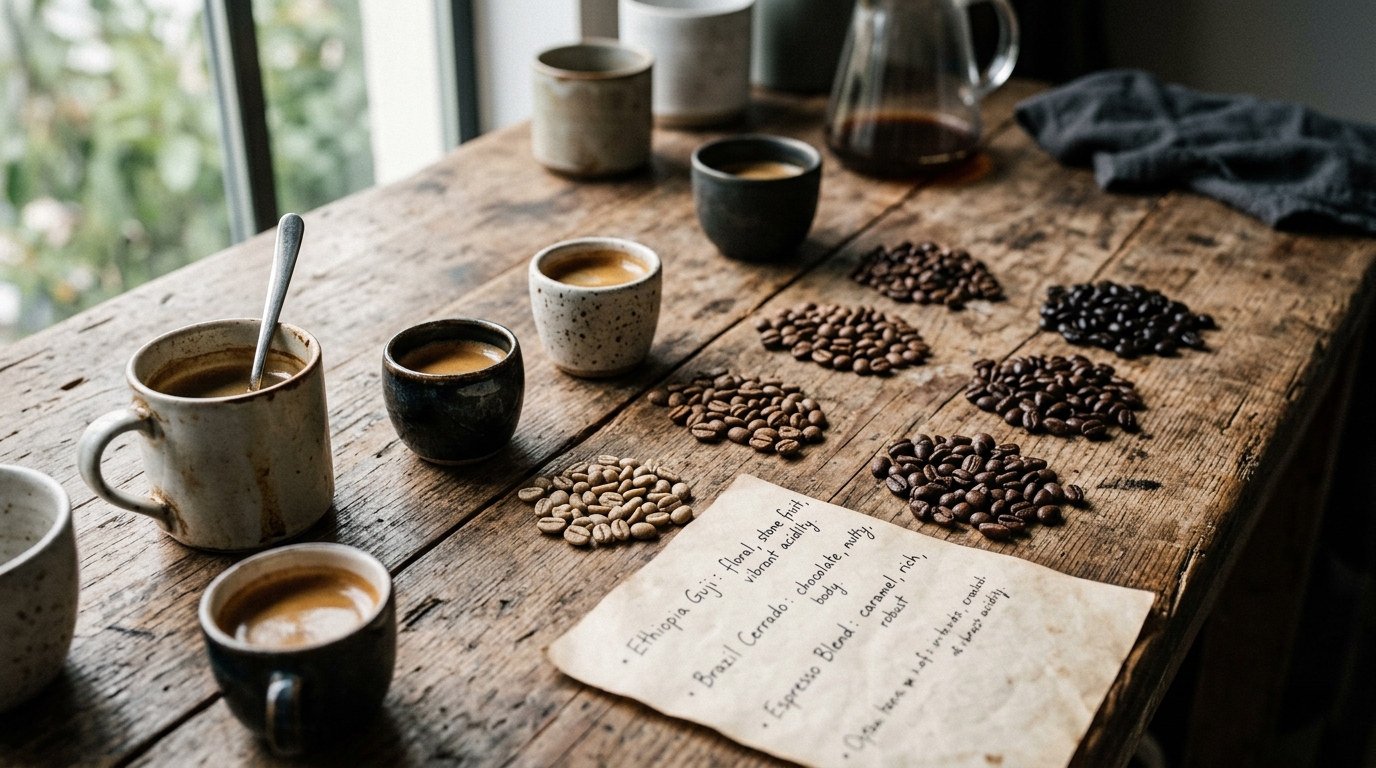
The longer-term benefit is more significant. After six months of logging, patterns start to emerge that you would never notice otherwise. You might find that every washed Ethiopian you try tastes better at 201°F (94°C) and a 1:2.2 ratio, while the natural Brazilians you buy from the same roaster consistently reward a 1:2 ratio with a shorter pull. These are not universal rules you read in an article. They are your rules, calibrated to your machine, your grinder, your water, and your palate.
Extraction yield is worth understanding here because it explains why ratio and time matter at the chemical level. Espresso extracts coffee solubles in a rough sequence: acids and some sugars extract early and fast, followed by the more complex sugars and Maillard reaction compounds, with certain bitter, astringent compounds coming last. When your shot pulls fast and light, you are getting a disproportionate amount of the early extracting acids without enough of the balancing sweetness. When it pulls too long or your grind is too fine, you are running into those late-extracting harsh compounds. A log lets you navigate this range with precision rather than by accident.
One Change at a Time, Documented
Logging only works if you pair it with disciplined experimentation. Change one variable at a time, record what changed and why, and evaluate the result before changing anything else. This sounds obvious, but in practice most people adjust grind size, tamp pressure, and dose simultaneously because the shot was bad and they want to fix it immediately. When the next shot is better, they have no idea which change helped.
A good rule is to make one adjustment per session unless you are chasing a catastrophic problem like severe channeling. Move your grind setting one step at a time. Hold dose and yield constant. Note whether the time changed as a result, and whether the flavor moved in the direction you wanted. If it did, you have learned something reliable. If it did not, that is also useful information, because it means the problem was not where you thought it was.
Analog or Digital, Just Be Consistent
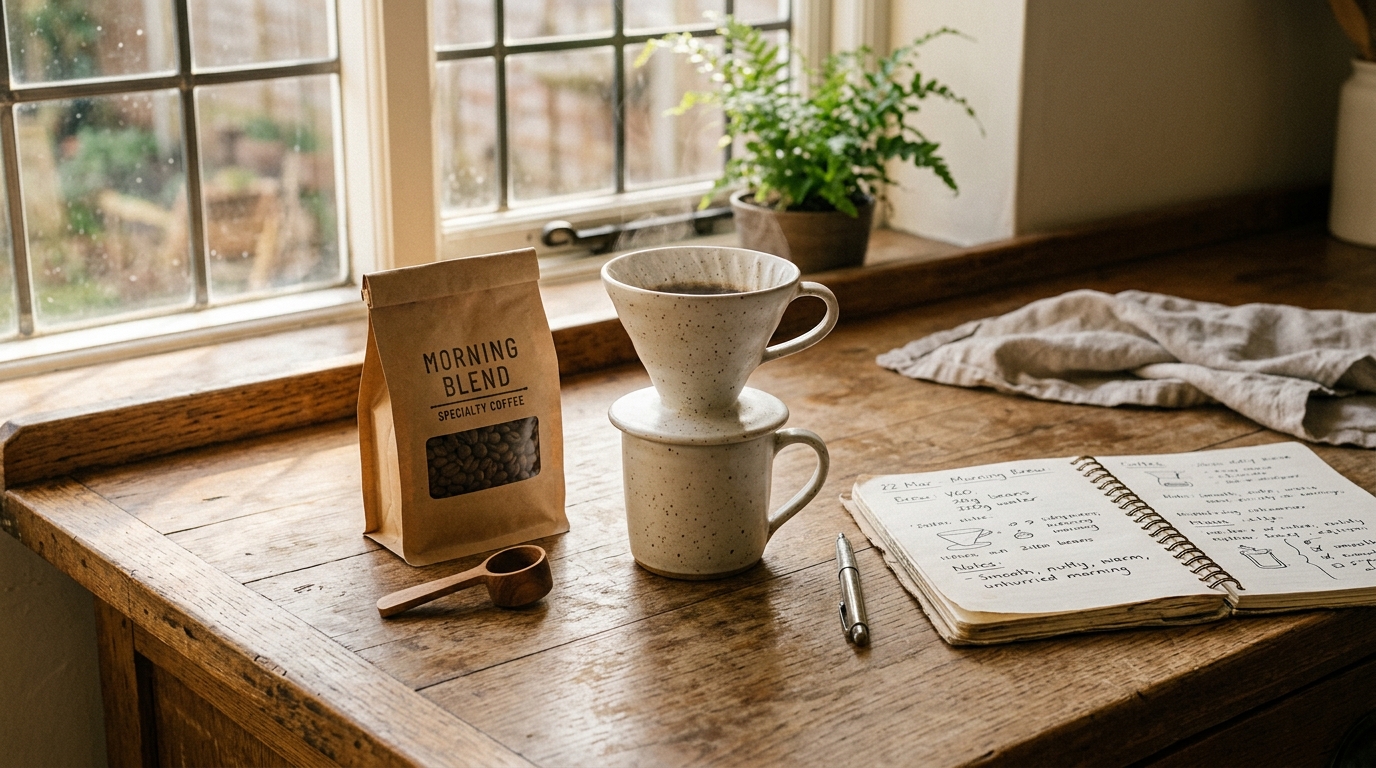
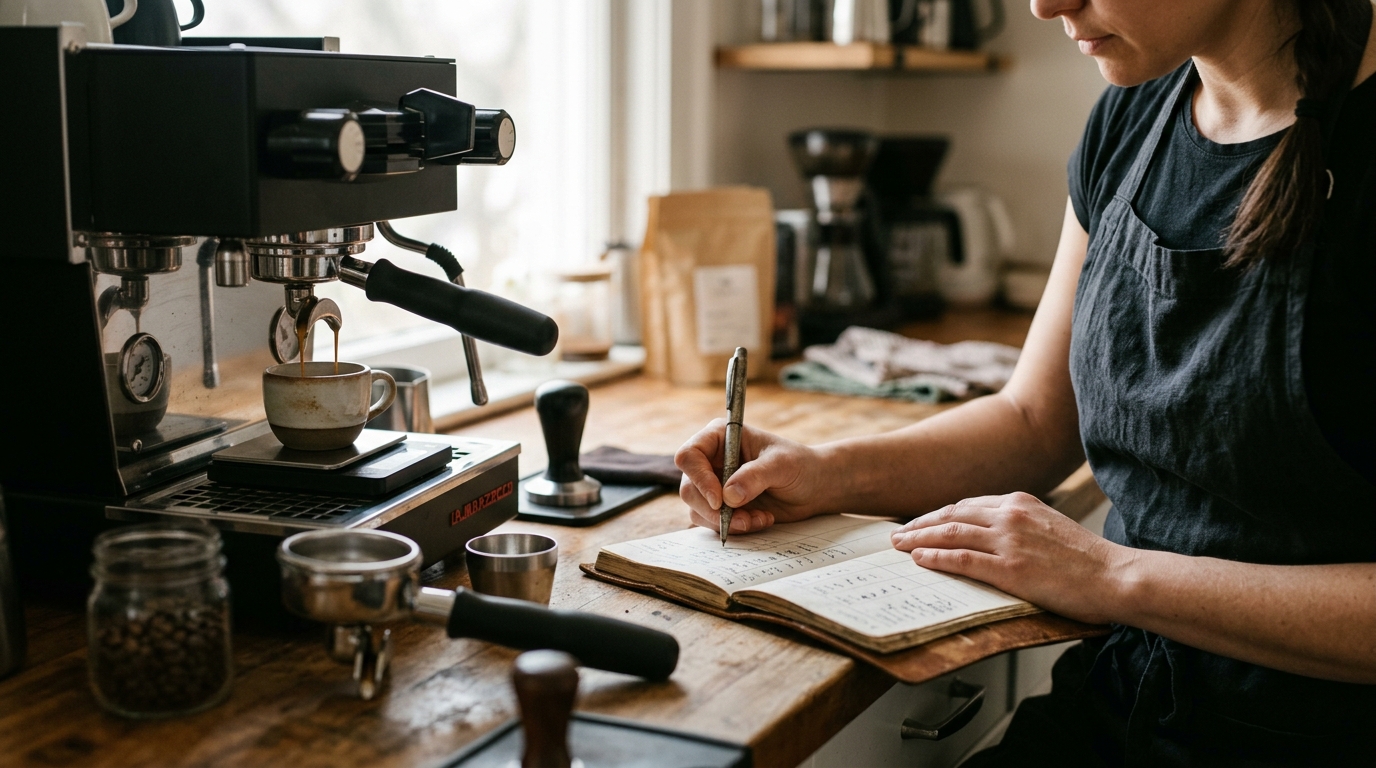
Some people keep a paper notebook next to the machine, which works well because the friction is low and there is no screen to unlock at 6 in the morning. Others prefer a spreadsheet, which makes it easier to sort by bean, review trends across time, and calculate ratios automatically. The format matters less than the habit. A log you actually maintain in a simple notebook is more valuable than an elaborate digital system you abandon after two weeks.
If you want a structured format built specifically around espresso variables without having to build your own spreadsheet, grindset.cafe was designed to track exactly this kind of data in a clean, focused interface. But whatever tool you use, the discipline of writing it down is the thing that matters.
The Practical Effect on Your Coffee
Baristas in professional settings keep shot logs because dialing in a new coffee on a busy bar without any written reference wastes product and time. The same logic applies at home, just with lower stakes and more room to experiment. Every bag of coffee you buy is slightly different from the last one, even from the same roaster and the same origin. Roast date affects solubility, processing method affects flavor development, and seasonal variation in the green coffee affects both. A log gives you the institutional knowledge to meet each new bag where it is, rather than starting from zero every time.
The baristas who improve fastest are not the ones with the most expensive equipment. They are the ones who pay close attention, write it down, and treat each shot as evidence rather than just a morning routine.