What Actually Happens During Espresso Extraction (And Why It Matters for Your Shot)
By the Grindset team · March 25, 2026 · 6 min read
The Basics: What Extraction Actually Means
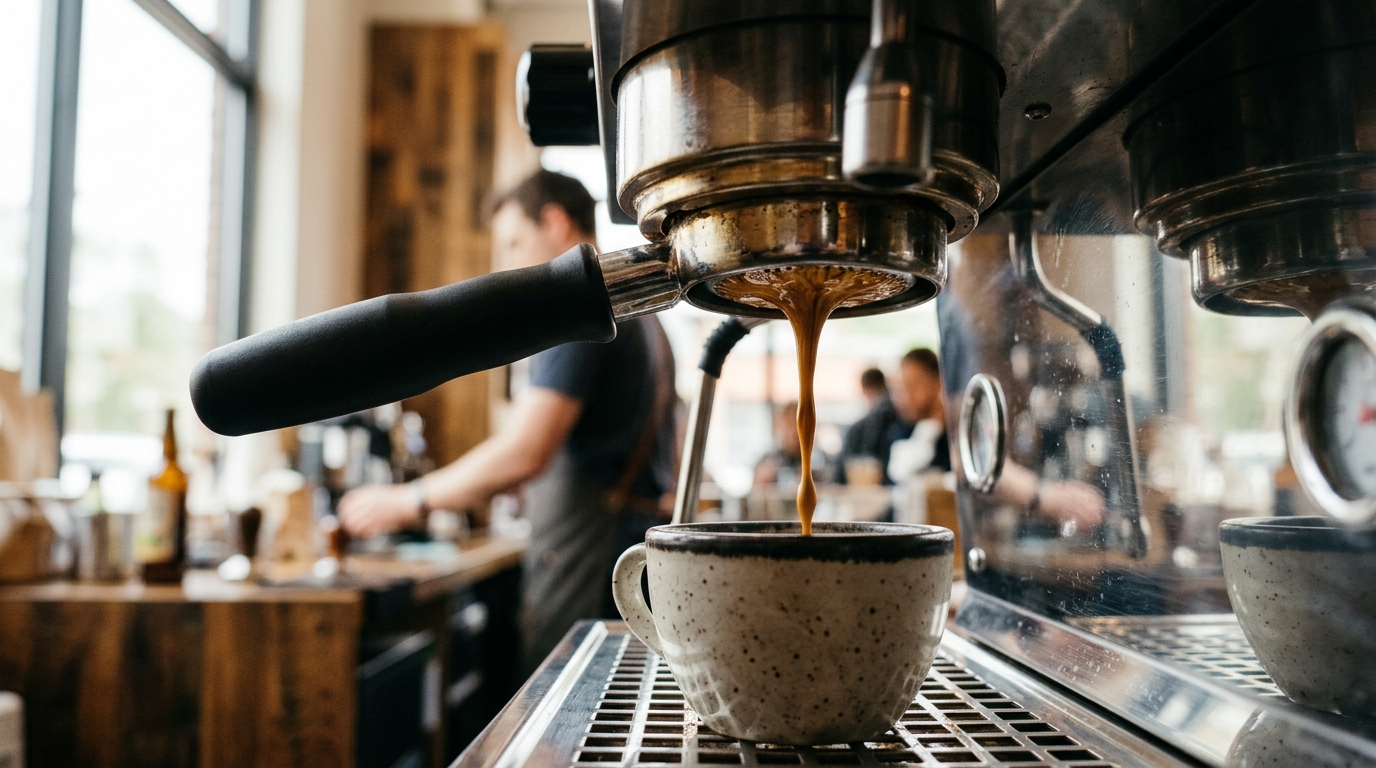
When you pull an espresso shot, you are dissolving soluble compounds out of ground coffee and into water. That's it, at its core. But the word "extraction" gets thrown around so loosely in coffee circles that it's worth slowing down and being precise about what's happening physically and chemically during those 25 to 35 seconds. Understanding the mechanism is what separates someone who can troubleshoot a bad shot from someone who just pulls the lever and hopes.

Extraction yield is the percentage of the coffee's dry mass that ends up dissolved in your cup. A 18-gram dose of coffee contains roughly 11 to 13 grams of extractable material, though not all of it tastes good. The specialty coffee industry broadly agrees that a target extraction yield of 18 to 22 percent produces the most balanced results, though espresso often skews toward the lower end of that range compared to filter brewing. Everything you adjust, your grind size, water temperature, brew ratio, and pressure, is just a different lever for moving that number up or down.
The Order of Extraction: Not Everything Dissolves at Once
Here's something that changes how you think about espresso: different compounds dissolve at different rates. The earliest compounds to extract are acids and fruit-forward aromatics. These are highly soluble and come out fast. Then come the sugars and the Maillard reaction products that give you sweetness and body. Finally, the heavier bitter compounds and some of the woody, astringent material dissolve last. This is not just a curiosity. It's the reason a 15-second shot tastes sharp and sour while a 45-second shot tastes bitter and hollow.
This sequential dissolution means that every shot is effectively telling you a story in time. The first few grams of liquid coming out of the portafilter are extremely concentrated and loaded with those early-dissolving acids and bright aromatics. As extraction continues, the liquid becomes progressively less concentrated and shifts toward sweeter and eventually more bitter compounds. What ends up in the cup is the integrated average of all of that. When baristas talk about "balance," they are really talking about catching the right window where acidity, sweetness, and bitterness are all represented in proportions that work together.
Pressure, Flow Rate, and What 9 Bars Actually Does
The conventional espresso standard is 9 bars of pressure at the group head, which is roughly 130 PSI. This pressure forces water through a tightly packed bed of coffee in a way that no other brewing method replicates, and it's responsible for two things that make espresso distinctive: the extraction of emulsified oils that would otherwise be trapped in the grounds, and the formation of crema from CO2 coming out of solution under pressure.
More important than the static pressure number, though, is flow rate. Pressure is what drives flow, but the resistance of the coffee bed determines how fast water actually moves through it. A finer grind increases resistance, slows flow, and extends contact time, which raises extraction yield. A coarser grind does the opposite. This is why grind size is your primary dial for controlling extraction. Adjusting temperature or dose also matters, but grind is where most of your correction work happens on a shot-to-shot basis.
Pressure profiling machines like the Decent or La Marzocca's newer offerings allow you to manipulate pressure throughout the shot, not just hold it static. This can be useful for slowing early extraction of harsh acids or for extending the sweetness window. But if you're on a traditional machine running 9 bars flat, you are not at a disadvantage. The vast majority of exceptional espresso in the world is still made that way.
Temperature and Its Effect on Solubility
Water temperature affects how readily compounds dissolve and how quickly extraction happens. Hotter water extracts more aggressively. For espresso, the practical range is roughly 90 to 96 degrees Celsius (194 to 205 degrees Fahrenheit), with most single-origin lighter roasts pulling better at the higher end of that range and darker roasts often tasting cleaner at 91 to 93 degrees Celsius.
The reason darker roasts benefit from slightly cooler water is that the roasting process has already driven significant chemical change in the bean. Longer roasts break down more of the cell structure, increase solubility of bitter compounds, and reduce the density of the coffee. If you hit a dark roast with 95 degree Celsius water, you over-extract the bitter material easily. Lighter roasts are denser and less soluble, so they need more thermal energy to pull their sweetness and complexity into solution. This is not an opinion. It follows directly from the chemistry of roast development.
The Puck: Why Distribution and Tamping Matter So Much
Water is not patient. It will find the path of least resistance through the coffee bed, and if that path is a channel rather than a uniform front moving through the puck, extraction becomes wildly uneven. Some coffee in the portafilter gets over-extracted while the rest barely gets touched. This is called channeling, and it's one of the most common reasons shots taste simultaneously bitter and sour, which people often find confusing since those are supposed to be opposite problems.
Proper distribution before tamping is about eliminating density variations in the coffee bed. Whether you use a distribution tool, the Weiss Distribution Technique, or just careful hand-settling, the goal is the same: give water a uniform bed to travel through. Tamping then consolidates that bed under even pressure, typically around 15 to 20 kilograms of force, though the exact number matters less than consistency and levelness. A tamp that's 3 degrees off level creates a thicker wall on one side of the puck, and water will route around it.
Brew Ratio: The Number That Ties It Together
Brew ratio is the relationship between your dry coffee dose and the weight of liquid espresso in the cup. A 1:2 ratio means 18 grams of coffee produces 36 grams of espresso. A ristretto-style ratio might be 1:1.5, while a lungo pushes toward 1:3 or beyond. This single number affects both extraction yield and concentration simultaneously, and tracking it by weight rather than by volume is one of the highest-leverage improvements a home barista can make.
Volume measurements are unreliable because crema varies in volume based on roast freshness, temperature, and technique. A shot that looks like 30ml one day might be 40ml the next. Grams don't lie. Once you start pulling shots on a scale and hitting a consistent ratio, you can isolate your other variables more cleanly. That feedback loop, weighing input and output, is what separates systematic improvement from guessing.
If you want to track your shots over time and build that kind of systematic feedback loop at home, grindset.cafe was built with exactly that in mind. But even without dedicated tools, understanding what's happening inside the portafilter during those 30 seconds gives you the vocabulary to diagnose what's going wrong and fix it. Espresso is repeatable physics. Once you see it that way, the troubleshooting becomes a lot less mysterious.