Single Dose vs Hopper Grinding for Espresso: How Each Method Affects Freshness, Workflow, and Shot Quality
By the Grindset team · June 17, 2026 · 7 min read
The Core Tradeoff You're Actually Making
When you choose between single dosing and running a hopper-fed grinder, you're not just picking a workflow preference. You're making a decision that touches bean freshness, grind retention, dose consistency, and how much mental overhead you're willing to carry during a morning shot pull. Both methods work. Neither is universally superior. But they perform very differently depending on your habits, your grinder, and how seriously you take shot-to-shot repeatability.
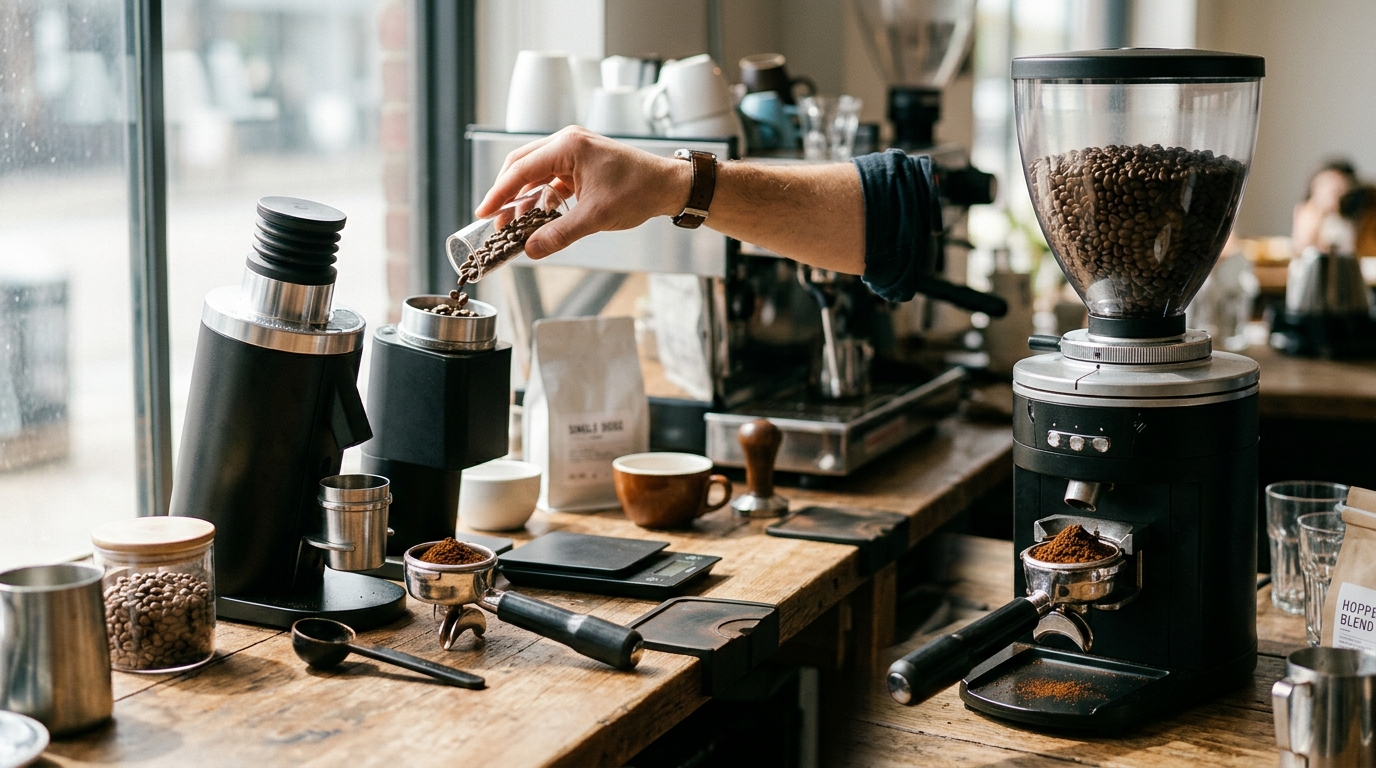
The distinction matters more than most people acknowledge when they're first setting up their home espresso station. Single dosing means loading exactly the beans you need, typically 16 to 20 grams for a standard double, directly into the grinder before each session. Hopper grinding means keeping a reservoir of beans in the grinder's hopper, often 200 to 500 grams at a time, and dispensing by weight or time as needed. Each approach has real consequences for what ends up in your portafilter.
What Happens to Coffee in a Hopper
Freshly roasted coffee is actively degassing CO2, and the rate of staling accelerates dramatically with exposure to oxygen, heat, light, and moisture. A hopper sitting on a grinder on your counter, even with a lid, is not a sealed environment. The beans inside are continuously exposed to ambient air, and if your grinder motor generates any heat, that accelerates oxidation further. Studies on coffee staling have shown that ground coffee loses volatile aromatic compounds within minutes, but whole beans in a warm, oxygen-exposed environment can go stale noticeably within two to four days depending on roast level and ambient conditions.
The more specific problem with hopper grinding is grind retention, which refers to the ground coffee that stays inside the grinding chamber, between the burrs and the exit chute, after a grind cycle ends. On many grinders, this can be anywhere from 0.5 grams to upwards of 3 to 5 grams depending on grinder design. That retained coffee sits inside a warm, vibrating machine, oxidizing between uses. When you grind the next day, you're pushing yesterday's stale grounds out with fresh ones. If you're dialing in and adjusting grind size frequently, the stale retained dose compounds the problem because the coffee exiting first reflects the old setting, not the new one.
The Single Dose Argument, Made Precisely
Single dosing eliminates both of those problems at once. Every shot starts with beans that were stored in a sealed container, typically at room temperature or in a cool pantry, and ground fresh immediately before brewing. There's no hopper exposure, and because you're loading only what you need, the retained grounds issue becomes irrelevant at steady-state since you're always flushing with new coffee of the same dose and setting. This is why specialty roasters and competition baristas have largely moved to single dosing when using home or prosumer equipment.
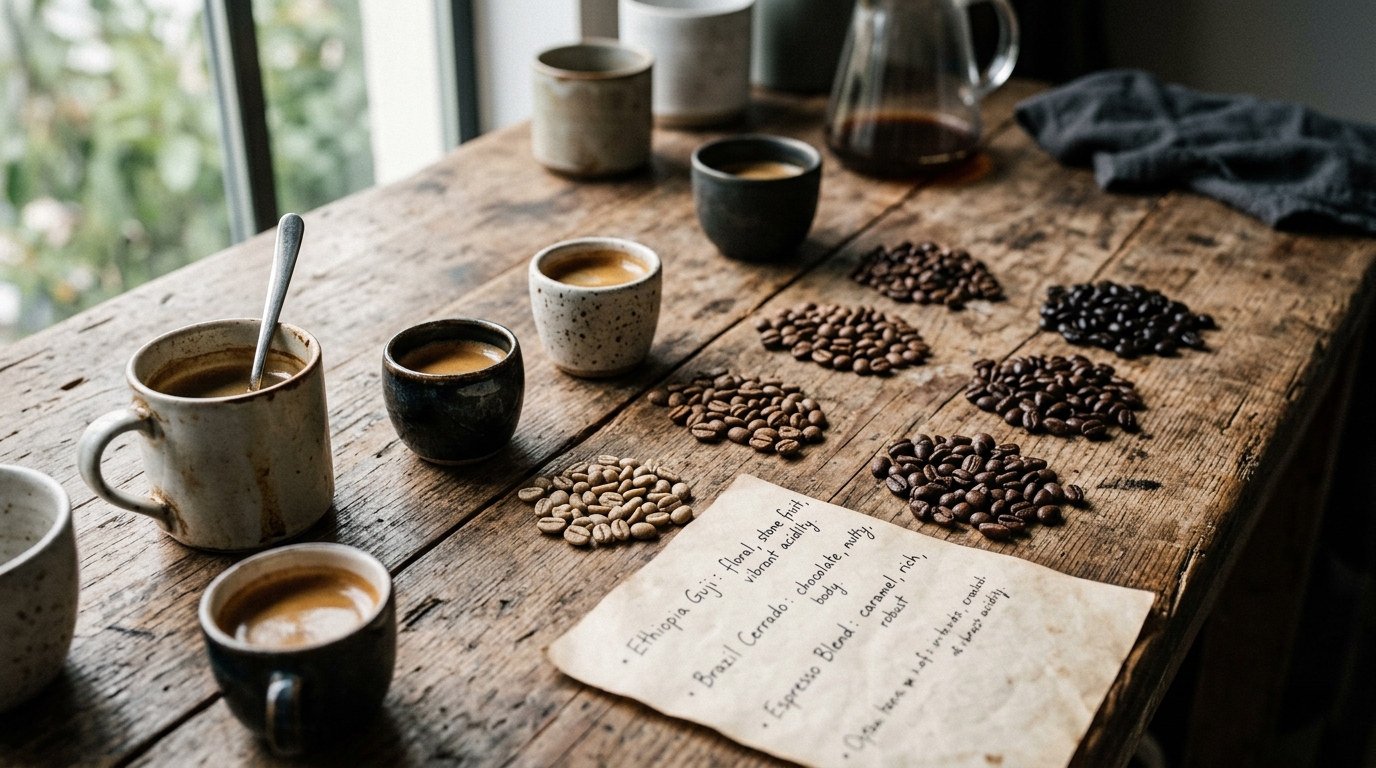
The freshness argument is particularly strong if you're rotating between multiple coffees, which is common among people who follow seasonal releases from roasters. With a hopper setup, switching beans means emptying, cleaning, and reloading, which is tedious enough that most people simply don't do it. With single dosing, you can pull a natural-process Ethiopian in the morning and a washed Guatemalan in the afternoon by switching between two small containers. The workflow actually encourages variety rather than punishing it.
There are real tradeoffs, though. Single dosing is more time-consuming per shot. You're measuring each dose on a scale, pouring into the grinder, and often dealing with clumping or static because you're not running a continuous flow of beans through the burrs. Many grinders with larger burr sets were designed around the assumption of a full hopper and don't single dose well without modifications or workarounds like the paper towel RDT method, where you add 0.4 to 0.6 milliliters of water to the beans before grinding to suppress static charge buildup.
Where Hopper Grinding Makes Sense
Hopper grinding shines in volume and speed scenarios. If you're making four to six drinks every morning for a household or small office, stopping to measure and pour individual doses slows everything down in a way that stops being practical quickly. Commercial and prosumer setups like the Mahlkonig E65S or Eureka Mignon Specialita are designed for continuous operation with a full hopper, and they perform at their best in exactly that context. The grind consistency and temperature stability of a fully loaded, warmed-up grinder running multiple doses in sequence is often better than a cold single-dose grinder running its first grind of the day.
Freshness concerns with hopper grinding are also manageable if you match your hopper load to your consumption rate. If you're going through 250 grams of coffee every three to four days, the beans in your hopper aren't sitting long enough for significant degradation, especially with a well-sealed hopper lid. The real failure mode is loading 500 grams and using 15 grams per day. That's a 33-day supply sitting in an open-air container on your counter, and yes, you will taste the difference by the third week.
Grinder Design and Its Role in This Decision
Not every grinder performs equally well for both methods, and this is where the hardware conversation becomes unavoidable. Grinders with low retention figures, typically under 0.5 grams, like the Weber EG-1, the Lagom P64, or the Niche Zero, were specifically engineered for single dosing and handle it without significant workflow penalties. The Niche Zero in particular became popular largely because it achieves near-zero retention through a relatively open grinding path, making single dosing straightforward even without extensive technique adjustments.
Conversely, trying to single dose on a grinder designed for hopper operation, like many prosumer flat burr grinders with deep retention, creates a cycle of waste and inconsistency. You're losing a meaningful percentage of your dose inside the machine, and you're flushing out stale retained grounds at the start of every grind. If your grinder retains 2 grams and you're dosing 18 grams, roughly 11 percent of your ground coffee isn't fresh from this session. At that level, the single dosing freshness benefit mostly evaporates.
Dialing In and Shot Consistency
One underappreciated factor is how each method interacts with the dial-in process. When you're making small grind adjustments looking for the right extraction, which you measure by shot time, flow rate, and yield, you need the grinder to respond quickly and accurately to setting changes. With a high-retention hopper grinder, grind setting changes don't fully express themselves for one to three shots because you're still clearing old grounds from the burr chamber. This wastes coffee and extends dial-in time considerably.
Single dosing, because you flush the retention with each dose by design, means your grind setting changes take effect almost immediately. For home baristas running one or two different coffees and pulling two shots per morning, this is a significant advantage in maintaining consistency and adapting to changes in bean age, since espresso typically needs slightly finer grinding as beans age past peak freshness at around 10 to 30 days post-roast.
Choosing Based on Your Actual Situation
The practical answer is that single dosing is the right default for home baristas pulling one to four shots per day from high-quality, freshly roasted beans, especially if they value the ability to switch between coffees. Hopper grinding makes sense when volume is the priority, when the grinder design favors it, and when bean turnover is fast enough to keep freshness from degrading in the hopper. If you're tracking your shots carefully and want to understand how these variables interact over time, grindset.cafe has tools designed specifically around that kind of shot-by-shot analysis.
What you want to avoid is the worst version of hopper grinding: a half-full hopper with two-week-old beans that you're adding new beans on top of, on a high-retention grinder you're single dosing against its design. That combination undermines every variable you care about simultaneously. Know what your grinder is built for, match your workflow to it, and the method you choose matters far less than executing it consistently.