The Case for a Fixed Warm-Up Sequence: How Repeatable Preparation Builds Long-Term Consistency
By the Grindset team · July 19, 2026 · 6 min read
The Problem With Winging It Every Morning
Most home baristas develop their espresso routine organically, adding steps here and there as they learn, until the whole process becomes something they do half-awake before their first cup. The machine gets turned on, maybe the portafilter sits in the group head, beans get ground while the boiler climbs to temperature. It works, sort of. But when you start tracking your shots carefully and something goes wrong, you quickly realize you have no idea which variable caused it. A sloppy warm-up is almost always part of the answer.
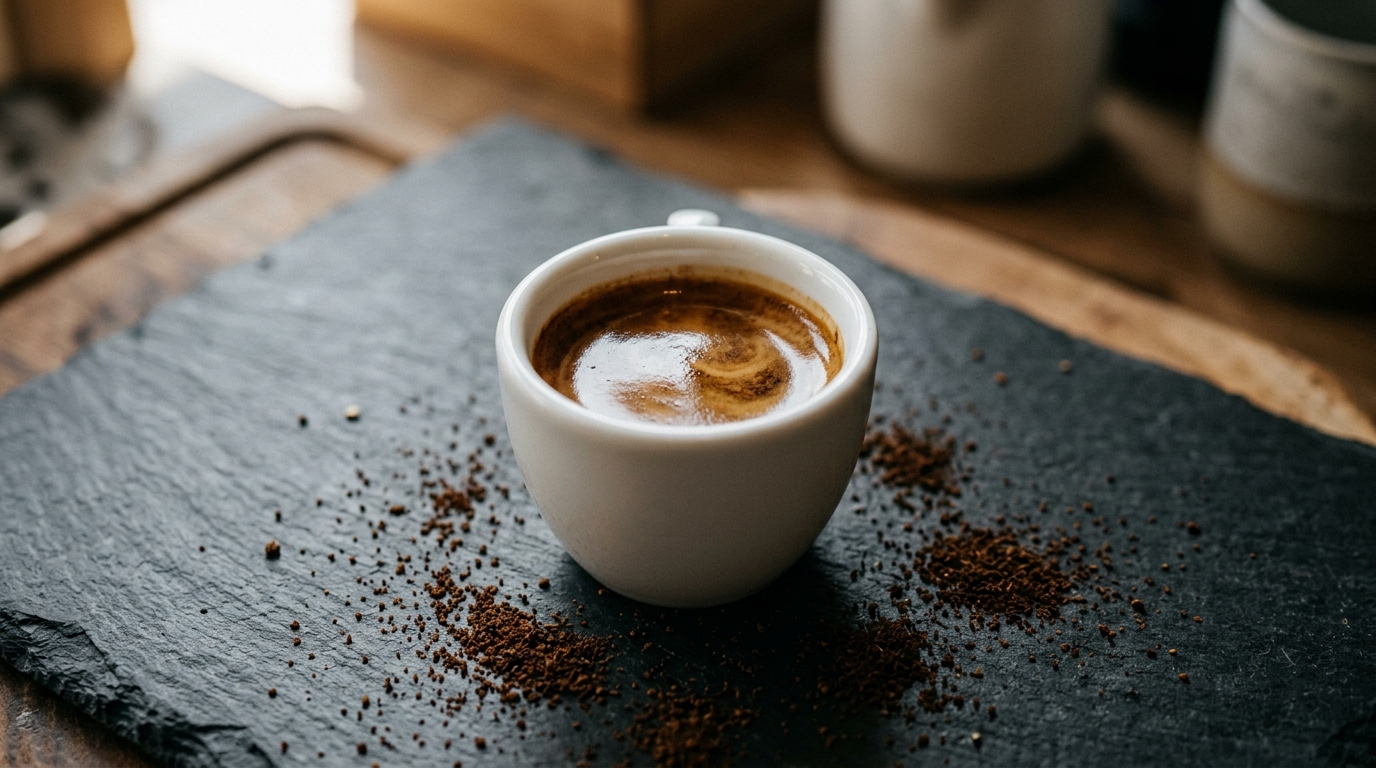
The underlying issue is thermal stability. Espresso extraction is enormously sensitive to temperature, and temperature is not a single number in a machine. It is a gradient across the group head, the portafilter, the basket, and the shower screen. When those components are cold or unevenly heated relative to your boiler or heat exchanger setpoint, your actual brew temperature at the puck diverges from what you think you are brewing at. A cold portafilter, for example, can drop your effective extraction temperature by 5 to 10 degrees Fahrenheit in the first few seconds of the shot, and that thermal sink effect diminishes as the metal mass warms up. If you are pulling shots while the machine is still stabilizing, every shot is being pulled under different conditions, and your data is meaningless.
What a Warm-Up Sequence Actually Does
A fixed warm-up sequence is not about ritual for its own sake. It is about bringing every variable that you can control into the same state before you start making decisions. The goal is to reach thermal equilibrium: a condition where the entire brew circuit, including the group head casting, portafilter body, and basket, is at a stable, known temperature and not continuing to change. Only at that point does your grind setting, dose, and yield actually correspond to consistent extraction conditions.
Machines without temperature probes at the puck level rely on the brewer to understand how long stabilization takes. On a single boiler machine like an entry-level Breville or Gaggia Classic, the boiler may reach setpoint in 15 to 20 minutes, but the group head often needs an additional 5 to 10 minutes of flushing and soaking to fully equilibrate. On heat exchanger machines like the Rocket Appartamento or ECM Classika, the group head tends to run hot because it is bathed in the steam boiler water, which means your warm-up sequence might actually include one or two cooling flushes to bring the temperature down to an appropriate brew range before locking in your portafilter. On dual boiler machines like the Breville Dual Boiler or Profitec Pro 700, active PID control speeds this up, but the portafilter and basket still need thermal soaking time, even if the group head itself stabilizes faster.
Building Your Sequence: The Steps That Matter
A good warm-up sequence is machine-specific, but the underlying logic applies universally. Here is the framework I use and recommend building from:
- Power on with the portafilter locked in. Locking the portafilter into the group head from the start allows it to absorb heat conductively throughout the entire warm-up period rather than sitting on the counter at room temperature until you are ready to pull a shot. This alone meaningfully reduces the thermal shock that cold metal introduces into the puck.
- Wait for the full rated warm-up time, then add a buffer. If your machine's manual says 15 minutes, treat that as the floor. Budget 20 to 25 minutes before you do anything else. Boiler temperature and group head temperature are not the same number, and they do not stabilize at the same rate.
- Run a flush or cooling flush depending on machine type. Before pulling a shot, run 2 to 3 ounces of water through the group with no portafilter installed. On single boiler machines, this clears any stale water from the boiler and stabilizes the group. On HX machines, this releases the thermosyphon heat and brings the group down toward a more appropriate brew temperature, typically targeting somewhere in the 198 to 203 degrees Fahrenheit range (92 to 95 degrees Celsius) depending on the coffee.
- Lock in the portafilter immediately after flushing. Once you flush, your group head temperature is changing. Lock in your portafilter and dose quickly, because dead time here introduces another variable. A blank portafilter sitting in a cold group for two minutes while you grind is not the same as a preheated portafilter locked in immediately before the shot.
- Time the sequence consistently. This is the part most people skip. Write down how long each step takes. If your flush sequence is 30 seconds, keep it 30 seconds every time. Repeatability is the entire point.
Why Consistency Here Compounds Over Time
Here is the thing about thermal variables that makes them so insidious: they do not just affect individual shots, they corrupt your ability to diagnose and improve. When you change your grind setting by half a step on your Niche Zero or Comandante and the shot changes, you want that change to be attributable to grind size alone. If your warm-up was 18 minutes one morning and 27 the next, or if you flushed once versus twice, you have introduced confounds that prevent you from knowing what actually changed the shot. A fixed warm-up sequence controls that variable, which makes every other variable you adjust more interpretable.
This is also where keeping shot logs becomes genuinely useful rather than just busywork. When you record your warm-up time as part of your shot data, you start to see patterns. Maybe your shots on weekdays, when you are rushing and your machine only gets 18 minutes, consistently run a few seconds faster at the same grind than your weekend shots with a full 25-minute warm-up. That is real data pointing to a real thermal phenomenon, and you can act on it by either extending your weekday warm-up or adjusting your grind slightly to compensate.
The Portafilter Is Not an Afterthought
One specific thing worth calling out is basket temperature, because it is easy to overlook. The basket is the closest piece of metal to your puck, and if it is cold, it will pull heat out of the coffee during extraction. At brew temperatures, you are working with water around 200 degrees Fahrenheit (93 degrees Celsius), and a basket sitting at 70 degrees Fahrenheit (21 degrees Celsius) represents a meaningful heat sink concentrated right at the point where it matters most. This is why many experienced baristas will rinse the portafilter and basket with hot water as part of their sequence, even on machines with long soak times. The goal is to get that basket temperature as close to brew temperature as possible before the shot starts.
Treating Preparation as Data
If you are tracking your shots in any serious way, whether in a notebook, a spreadsheet, or an app like grindset.cafe, your preparation sequence deserves the same attention as your dose and yield. The machine state at the moment you pull the shot is as much a part of your recipe as the grind setting. Once you commit to a fixed warm-up sequence and execute it the same way every time, you will find that your shot-to-shot variance drops noticeably, not because you became a better barista overnight, but because you eliminated a major uncontrolled variable that was masking your actual skill and your coffee's actual potential.
Repeatability is what separates someone who pulls good shots sometimes from someone who understands why their shots are good. The warm-up sequence is where that repeatability starts.