Dialing In Your Espresso: How to Know Whether to Adjust Grind Size or Dose When Your Shot Is Off
By the Grindset team · August 2, 2026 · 6 min read
The Two Levers Everyone Reaches For
When a shot tastes wrong, most home baristas do one of two things: they either grind finer or they add more coffee. Both changes will alter the flavor in your cup, and both will shift your extraction time, but they work through completely different mechanisms and solve completely different problems. Conflating them is one of the most common reasons people spend forty-five minutes chasing a shot that never quite gets there. Understanding which variable to move, and when, comes down to knowing what each one actually does to the coffee inside your basket.
Grind size controls the surface area exposed to water and the resistance that packed grounds create against flow. A finer grind produces more particles with more total surface area, which increases extraction yield and slows the shot down by tightening the puck. Dose controls the total mass of coffee in the basket, which affects puck depth, bed resistance, and the ratio of coffee solids to water in your final beverage. They both change resistance, yes, but the similarity ends there. One changes how efficiently water dissolves solids from each particle; the other changes how many particles are in the game to begin with.
What Your Shot Is Actually Telling You
Before you touch anything, pull a shot and pay attention to two numbers: your extraction time and your output weight. A well-dialed espresso using a standard 1:2 ratio, say 18 grams in and 36 grams out, should typically fall somewhere between 25 and 35 seconds depending on your machine, your roast, and your recipe. If you're outside that window, the shot is giving you a clear signal. The question is what kind of signal.
A shot that runs fast and tastes sour, thin, or sharp is under-extracted. Water moved through the puck too quickly to dissolve enough of the desirable organic acids, sugars, and melanoidins. A shot that runs slow and tastes bitter, hollow, or ashy is over-extracted. Water lingered too long and began pulling out the heavier, harsher compounds that extract late in the process. Grind size is almost always your first adjustment in either case, because it has a more direct and precise effect on extraction yield than dose does.
Grind Size Is Your Primary Extraction Control
Think about what happens at the particle level when you go finer. You're increasing the surface-area-to-volume ratio of every coffee particle. More cell wall surface is exposed to hot water at 200 degrees Fahrenheit (93 degrees Celsius), which means soluble compounds can diffuse out more rapidly and completely. You're also creating a denser puck with more tortuous flow paths, which increases resistance and slows the shot, giving water more contact time with those newly exposed surfaces. Going coarser does the opposite: fewer exposed surfaces, less resistance, faster flow, lower yield.
This is why grind adjustment is your first response to most extraction problems. If your shot tastes sour and runs in 18 seconds, grind finer. If it tastes bitter and takes 45 seconds to yield the same output weight, grind coarser. The changes are incremental and predictable. On most burr grinders, a single click or a half-number step on the adjustment collar changes your shot time by 3 to 8 seconds, depending on the grinder. You can dial extraction with real precision this way.
The key rule: fix the flavor first by adjusting grind size before you start moving dose. Dose changes confound the picture because they shift multiple variables simultaneously, and you lose track of which change did what.
So When Does Dose Actually Matter?
Dose becomes the right adjustment when your grind size is already dialed in and you're trying to change the character or strength of a shot that is otherwise extracting correctly. If you have a shot pulling in 28 seconds at 1:2 that tastes well-balanced but too weak or too syrupy for your preference, that's a dose conversation. Increasing dose from 18 grams to 19 grams while holding your output weight constant at 36 grams gives you a slightly more concentrated beverage without meaningfully changing your extraction yield percentage.
Dose also matters when you're working with a specific basket. Most commercial baskets have a rated dose range, and operating significantly outside that range causes channeling. A 58mm VST 18-gram basket is designed for 17 to 19 grams. Put 14 grams in it and the puck is too shallow, water finds the path of least resistance, and you get uneven extraction no matter how fine you grind. In that case, dose isn't a flavor preference choice, it's a physical requirement for the basket to work correctly.
Dose also interacts with your output ratio. If you're experimenting with lungo-style shots at 1:3 or ristretto-style at 1:1.5, the starting dose shapes how much body and sweetness are available to carry across that ratio. But again, this is a recipe-design decision, not a troubleshooting decision. Troubleshooting means grind first.
The Interaction Between Grind and Dose
Here's where things get genuinely complicated for people: grind size and dose are not fully independent. If you increase dose by 2 grams, you increase puck depth, which increases resistance, which slows your shot. To compensate and keep your timing in the same window, you might need to grind slightly coarser. Conversely, if you drop your dose, you may need to grind finer to maintain the same resistance profile. This is why changing both variables at the same time is a bad idea. You can't tell which change produced which result, and you'll end up spinning in circles.
The practical discipline here is to change one variable at a time, pull the shot, record the results, and evaluate before touching anything else. This sounds obvious, but under the pressure of wanting a good coffee right now, it's easy to tweak the grinder, add a gram, and tamp differently all in the same pull. That approach teaches you nothing and wastes good beans.
A Simple Decision Framework
- Shot runs fast and tastes sour or sharp: grind finer, hold dose constant.
- Shot runs slow and tastes bitter or hollow: grind coarser, hold dose constant.
- Shot timing and flavor are good but the cup is too weak: consider increasing dose slightly or tightening your output ratio.
- Shot timing and flavor are good but it's too intense or syrupy: try a slightly higher output ratio before reducing dose.
- Shot channels or extracts unevenly regardless of grind: check that your dose is appropriate for the basket you're using.
Notice that four out of five scenarios start with grind. Dose is the last variable to move, not the first.
Tracking What You Change
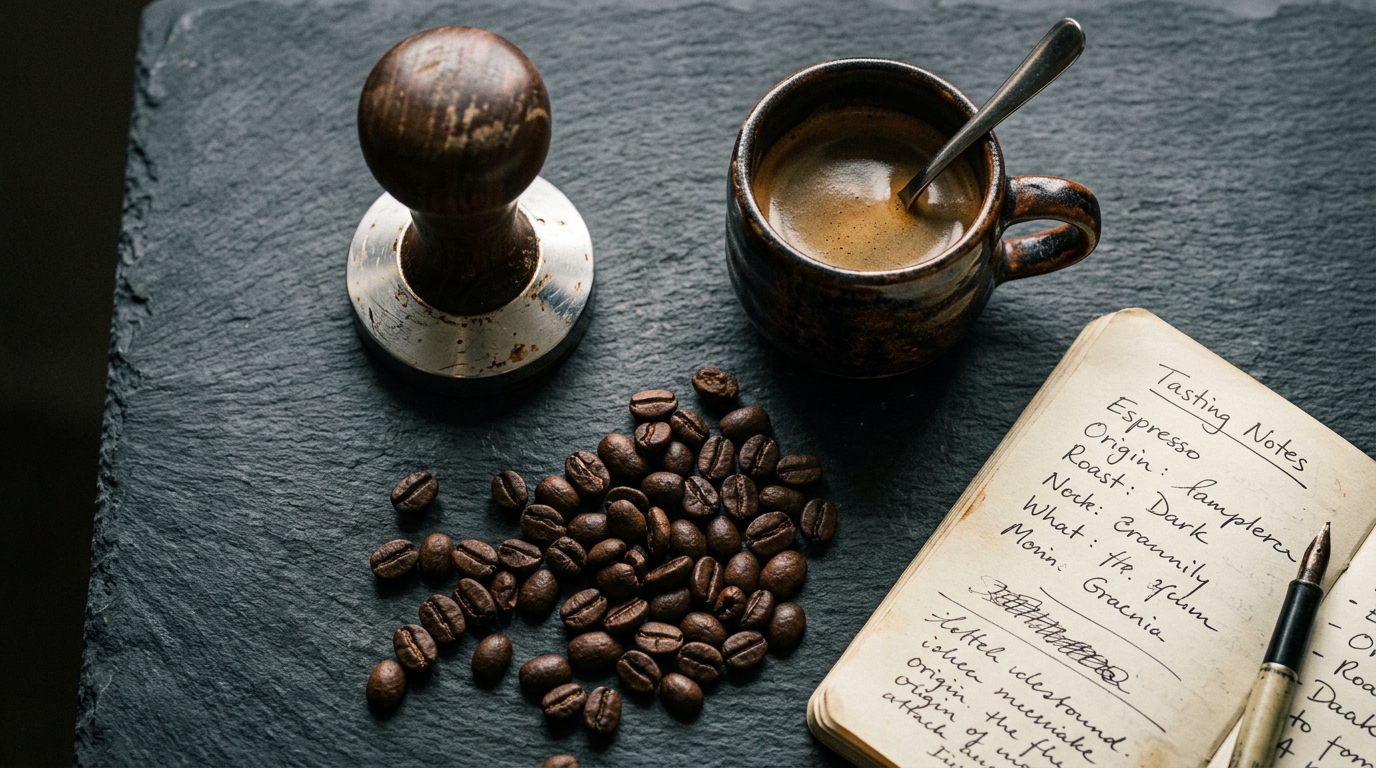
None of this matters if you're not recording your pulls. Memory is unreliable, especially when you're adjusting across multiple sessions with coffee that is aging and degassing the whole time. Keeping a shot log, even a basic one with grind setting, dose, yield, and time, lets you see patterns and retrace your steps when something stops working. It's the only way to build actual intuition rather than just guessing. Grindset.cafe was built specifically for this kind of tracking, giving you a place to log each shot and see how your adjustments are trending over time.
The mental model to carry forward is this: grind size is your extraction dial, and dose is your recipe dial. Use the extraction dial to fix a broken shot. Use the recipe dial to refine a shot that's already working. Keep them in their lanes, adjust one at a time, and your dialing-in sessions will get shorter and your coffee will get better.