Moka Pot vs Espresso Machine: Key Differences in Taste, Cost, and Brewing Control
By the Grindset team · September 6, 2026 · 6 min read
Two Very Different Tools With a Shared Misunderstanding
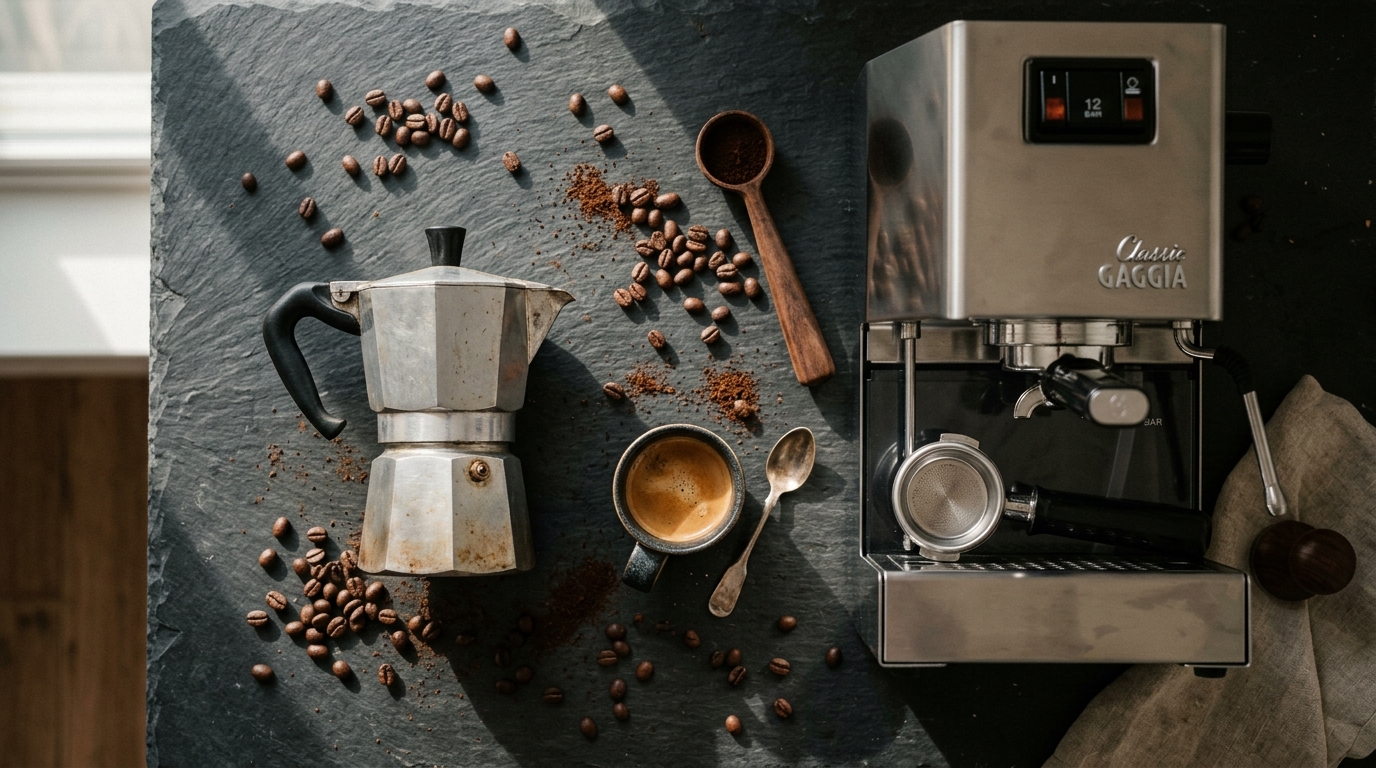
The comparison between moka pots and espresso machines gets muddled from the start because of a widespread misconception: moka pots do not make espresso. They never did. The marketing language on Bialetti boxes, the casual shorthand at kitchen tables across Italy, the way coffee shops describe stovetop drinks as "stovetop espresso" — all of it has created a persistent confusion that makes it harder to evaluate these two brewing methods on their actual merits. Once you understand what each device is physically doing to the coffee, the comparison becomes much clearer and more useful.
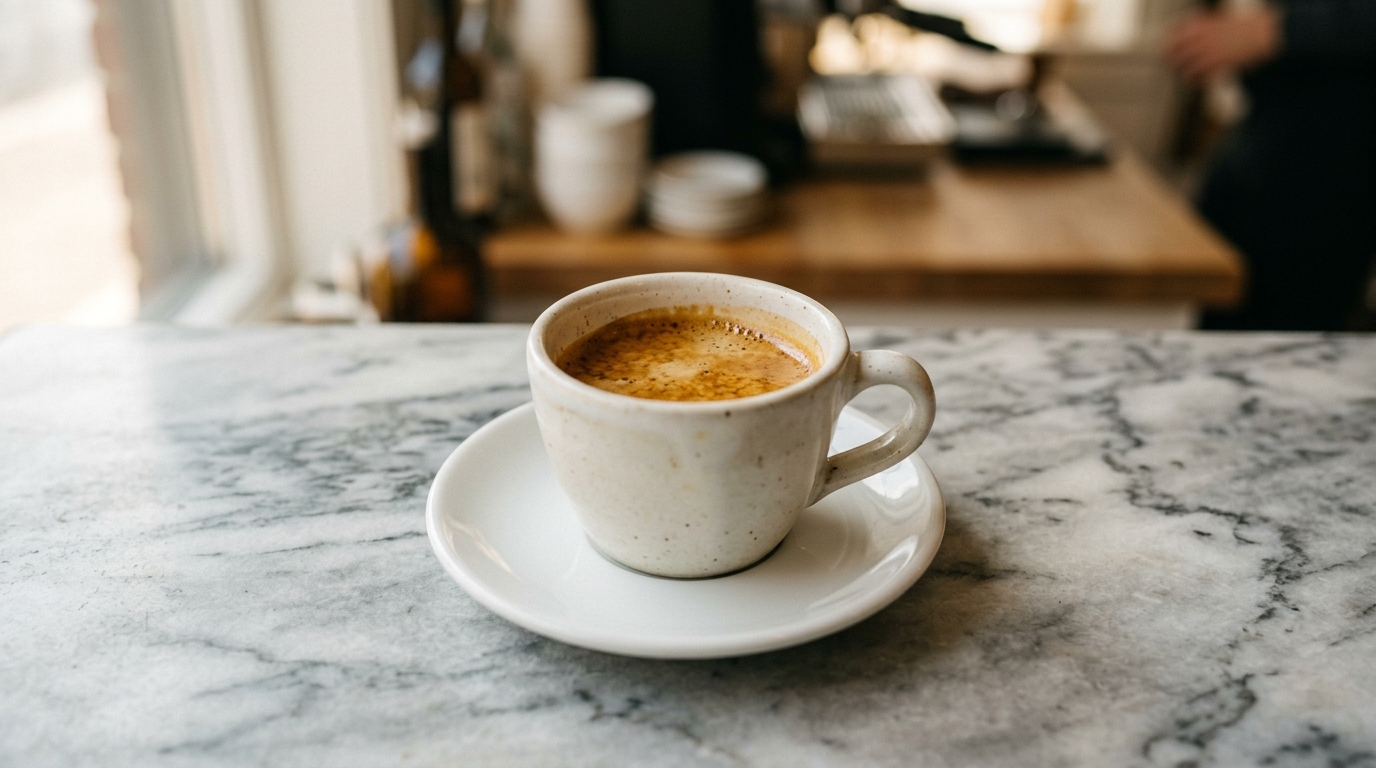
A proper espresso machine forces water through a compacted puck of finely ground coffee at approximately 9 bars of pressure, at a brew temperature typically between 195°F and 205°F (90°C and 96°C), in about 25 to 35 seconds. That high pressure is what creates the emulsified oils, the syrupy body, and especially the crema — a colloid of CO2 microbubbles and lipids that gives espresso its characteristic texture and bittersweet finish. A moka pot, by contrast, generates somewhere between 1 and 2 bars of pressure by heating water in a sealed lower chamber until steam pressure pushes the water up through a basket of coffee and into the upper chamber. It is closer in extraction character to a very strong, concentrated filter brew than to true espresso.
Taste: What Each Method Actually Produces
Moka pot coffee is intense, bold, and often bitter, with a heavier body than drip coffee but without the creamy mouthfeel and layered complexity of true espresso. Because the water temperature as it passes through the grounds is often higher than ideal, and because there is no real pressure-driven emulsification happening, you get more of the harsh, high-molecular-weight compounds extracted late in the process. The result tends to taste darker and more roasty than the same beans brewed as espresso, even if the coffee-to-water ratio looks similar on paper. This is not necessarily bad. Many people love the straightforward, punchy character of a moka pot brew, and it works well with milk in a latte-style drink at home.
Espresso, brewed correctly on a machine calibrated to hit that 9-bar sweet spot, produces something structurally different. The emulsified oils contribute fat-soluble flavor compounds that you simply cannot get at low pressure. The crema carries aromatic volatiles. The texture is thicker and more viscous. When extraction is dialed in properly, a well-made espresso has a clarity and brightness that moka pot coffee cannot replicate, even from identical beans. That said, a poorly pulled shot on a cheap or poorly maintained espresso machine will taste worse than a carefully made moka pot brew. The ceiling is higher with espresso, but so is the floor when things go wrong.
Cost: The Real Gap Between These Methods
A classic Bialetti Moka Express in a 3-cup size costs around $35 to $45. A 6-cup version is maybe $10 more. That is the entire capital investment, and it will last decades with basic maintenance — replacing the rubber gasket every year or two, keeping the aluminum clean. The operating cost is similarly minimal: no filters to buy, no electricity beyond your stovetop burner, no descaling chemicals.
Entry-level espresso machines start around $100 to $150 for something like a basic pump machine from DeLonghi or Breville, but at that price point you are likely dealing with machines that cannot hold temperature consistently and that top out at around 15 bars of rated pump pressure (which sounds like more than enough but often means the actual pressure at the puck is inconsistent). To get a machine that reliably produces quality espresso with stable temperature control, you are realistically spending $400 to $700 minimum for something like a Breville Bambino Plus or a Gaggia Classic Pro. A truly capable setup with a quality grinder factored in can easily run $1,000 to $2,000 or more. The grinder matters enormously because espresso demands a consistent, fine particle size distribution that a blade grinder or cheap burr grinder cannot deliver. This is where most people underestimate the total cost of getting into espresso properly.
Brewing Control: Where the Gap Becomes Obvious
The moka pot offers almost no real variables to manipulate beyond grind size, coffee dose, and how aggressively you heat the lower chamber. Water temperature cannot be set precisely. Pressure cannot be adjusted. Brew time is loosely controlled by burner heat, but it is difficult to repeat exactly. For many home brewers, this simplicity is part of the appeal — you fill it, heat it, pour it, and you are done. But if you are trying to troubleshoot an extraction problem or systematically improve your results, you are working with blunt instruments.
A quality espresso machine gives you control over brew temperature, pre-infusion time, pressure profiling (on higher-end machines), and shot duration. Combined with a scale and a timer, you can pull a shot at a precise 1:2 ratio, meaning 18 grams of ground coffee in and 36 grams of liquid espresso out, in 28 seconds at 200°F (93°C), and then repeat that exact extraction the next morning. This repeatability is what separates espresso as a craft from espresso as a lucky accident. When you can isolate variables, you can actually learn what each adjustment does to the flavor and refine your approach systematically over time.
Which One Should You Actually Buy?
The honest answer depends on what you are optimizing for. If you want a strong, concentrated coffee to drink black or mix into milk drinks, and you want to spend almost nothing while learning the basics of coffee extraction, a moka pot is a legitimate and satisfying tool. It will not produce espresso, but it will produce a drink many people love. The 6-cup Bialetti on a gas burner at medium-low heat, with a medium-fine grind and the lid open so you can stop the brew before it sputters aggressively, makes a good cup of coffee. That is a defensible statement.
If you want real espresso, with real crema, real body, and the ability to pull a shot that tastes like what you get at a good cafe, then you need an actual espresso machine with a pump that reaches 9 bars at the puck, combined with a burr grinder capable of espresso-fine grinding. There is no shortcut or workaround here. The physics of emulsification and CO2 solubility require pressure. No amount of technique on a moka pot will change that underlying chemistry.
What I would suggest is being clear with yourself about your goals before spending money. Track your shots, experiment with your variables, and pay attention to what each change does to the flavor in the cup. If you want a place to log that data and see patterns in your extractions, grindset.cafe was built for exactly that kind of systematic approach to dialing in your setup. But the most important thing is understanding the mechanism behind what you are brewing, because that knowledge transfers to every method you use.
The Bottom Line
The moka pot makes strong, concentrated, sometimes excellent coffee. The espresso machine, when set up properly, makes espresso. These are not the same thing, and pretending they are does a disservice to both methods. Choose based on your budget, your interest in controlling variables, and what kind of drink you actually want in your cup. Neither choice is wrong. But knowing the difference is the whole point.