
How to Identify Common Coffee Defects by Taste and Smell — And What's Causing Them in Your Cup
By the Grindset team · May 17, 2026 · 6 min read
Why Defect Recognition Matters More Than You Think
Most coffee drinkers know when something tastes off, but they can't say why. They blame the beans, or the equipment, or chalk it up to a bad day. The truth is that almost every unpleasant flavor in a cup has a specific cause, and once you can name what you're tasting, you can trace it back to its source with reasonable accuracy. Defect recognition is a diagnostic skill, and like any skill, it improves with deliberate practice and a solid understanding of what's actually happening at a chemical and physical level during roasting, extraction, and even fermentation at origin.

This matters especially for espresso, where the high pressure and concentration of the brew method amplify every flaw. A subtle fermentation defect that might be forgivable in a pour-over becomes a sharp, vinegary assault in an espresso. The compression of flavor that makes espresso so satisfying when things go right makes it merciless when they don't.
Sourness vs. Acidity: The Most Misunderstood Distinction
Before getting into specific defects, it's worth establishing one of the most important distinctions in coffee tasting: the difference between acidity and sourness. Good acidity in coffee is bright, clean, and comes with a sweetness that balances it. You taste it at the sides of the tongue and it lifts the cup. Sourness, by contrast, is sharp, unpleasant, and lingers in the wrong way. It signals the presence of acetic acid or undesirable organic acids from either under-extraction or fermentation issues at the processing stage.
Under-extracted espresso, typically anything pulled below about 18 to 20 percent extraction yield, tastes sour because the soluble compounds that provide sweetness and body dissolve later in the extraction process than the acids do. If you cut the shot short, you've collected the acidic fractions and left the balancing sweetness behind. The fix is usually extending your extraction by grinding finer, increasing dose, or slowing the shot. If the sourness persists even at a proper extraction yield confirmed by weight and timing, the problem may be the beans themselves.

The Fermented and Winey Defect
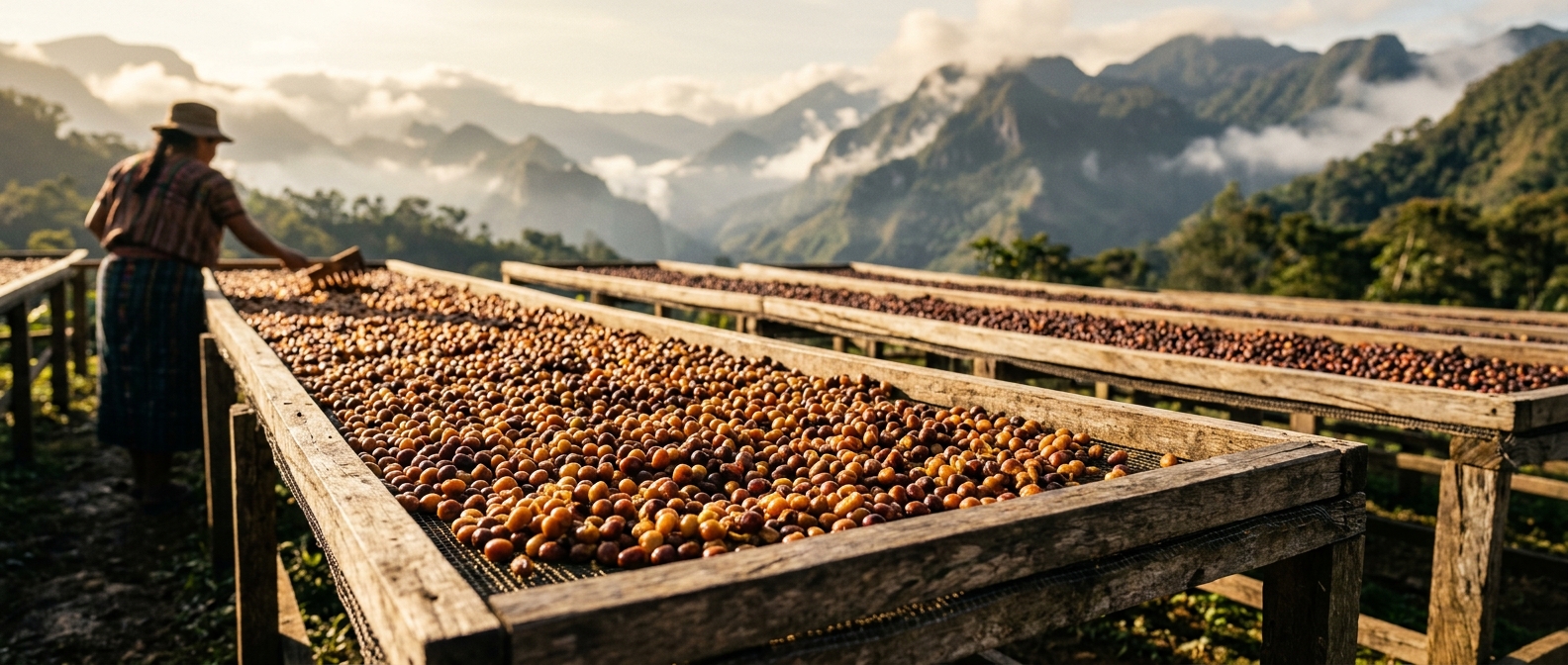
A fermented defect smells and tastes like overripe fruit, cheap wine, or sometimes vinegar. It's one of the most recognizable off-flavors in coffee and almost always originates at the farm or processing mill, not in your kitchen. It happens when coffee cherries are left too long before processing, or when wet-processed coffee sits in fermentation tanks past the point where naturally occurring yeast and bacteria break down the mucilage cleanly. The byproduct is acetic acid and various alcohols that survive roasting and end up in your cup.
This is a green coffee defect, meaning no amount of adjusted grind size or brew temperature will fix it. If you're tasting a pronounced winey or vinegar character across multiple brew methods and at different extraction levels, the problem is upstream. Some natural-processed coffees intentionally skirt close to this line for a fruity, funky character, but there's a clear difference between controlled complexity and a defect that overwhelms the cup. When in doubt, compare against a washed coffee from a reliable roaster to recalibrate your palate.
Bitter and Astringent: Related But Not the Same
Bitterness is often blamed first when a cup goes wrong, but it's frequently misidentified. True over-extraction bitterness comes from dissolving compounds like chlorogenic acid lactones and phenylindanes, which only come into solution during the later stages of extraction or under excessive heat. It's a dry, coating bitterness that sits at the back of the tongue and doesn't fade quickly. In espresso, this typically means your extraction temperature is too high (above 200 to 203 degrees Fahrenheit or 93 to 95 degrees Celsius for most medium roasts), your grind is too fine for the dose, or your total extraction time is running too long.
Astringency is different. It's the rough, sandpapery sensation that makes your mouth feel dry and puckered. It comes from tannin-like compounds, often a sign of very light roasts that haven't fully developed, or from channeling during espresso extraction. Channeling occurs when water finds a path of least resistance through your puck rather than permeating it evenly, causing portions of the coffee to over-extract while others barely extract at all. You end up with a mix of under-extracted sourness and over-extracted astringency in the same shot. Improving your distribution and tamp technique, or switching to a better-designed basket, usually addresses channeling more effectively than adjusting grind or temperature.
Staleness and Rancidity
Stale coffee has a flat, cardboard-like, sometimes musty quality. What you're tasting is the result of oxidation, which begins immediately after roasting and accelerates once the bag is opened. The volatile aromatic compounds that give fresh coffee its complexity are reactive and degrade on contact with oxygen. Carbon dioxide, which is off-gassed during and after roasting, acts as a partial barrier in the early days, but once that's gone, the aromatics are exposed. A coffee that smells incredible as freshly roasted beans will smell and taste like wet paper a month after opening if stored improperly.
The fix is straightforward but requires discipline: buy smaller quantities more frequently, store beans in an airtight container away from light and heat, and use beans between about 7 and 30 days off roast for espresso. Very fresh coffee (within the first 3 to 5 days) can actually be difficult to work with because excess CO2 interferes with extraction and causes unpredictable channeling. Rancidity is a different but related issue, where oils in the coffee have undergone lipid oxidation. This produces a distinctly unpleasant, almost fatty or greasy off-flavor. It's more common in pre-ground coffee stored in warm conditions, since grinding dramatically increases surface area and accelerates the process.
Rubbery, Smoky, and Roast Defects
A rubbery or burnt tire off-flavor is almost always a roast defect. It indicates that the roaster applied too much heat too quickly at the wrong stage, scorching the outside of the bean while the inside remained underdeveloped. This is sometimes called scorching or tipping, and the chemical culprits include pyrazines and other compounds from excessive Maillard reaction byproducts under harsh heat. Excessively dark-roasted coffees from commercial roasters often carry a smoky, harsh, ashy bitterness that some people have been conditioned to expect as normal. It isn't. A well-developed dark roast should be rich, low-acid, and chocolatey without tasting like the inside of a chimney.
If you're consistently getting these flavors and you haven't changed your technique, the problem is almost certainly the roast. Switching to a specialty roaster who publishes roast development information, or at minimum who can describe the coffee's flavor profile with specificity, is the single fastest way to eliminate roast defects from the equation.
Building the Habit of Diagnostic Tasting
The most useful thing you can do is slow down and taste with intention before adjusting anything. Describe the defect as specifically as you can: where in the mouth do you feel it, how quickly does it fade, does it appear in the aroma before you even sip. This specificity is what separates productive troubleshooting from random dial-turning. I built grindset.cafe partly around the idea that logging your shots with real tasting notes, not just "good" or "needs work," creates a feedback loop that actually teaches you something over time. Pattern recognition in your own palate is one of the most valuable things you can develop as a home espresso enthusiast, and it starts with being willing to name what's wrong and ask why.